Switzerland and the Polish Nation-State: Manuscript Heritage of Central European Slavic Languages in Switzerland
During the period 2024–2025, the pilot project, funded by the Zurich-based Empiris Foundation, tested the AI-supported capture and analysis of previously unexplored Slavic manuscripts (16th to 20th century) from the collections of the Polish Museum in Rapperswil. With over 600 digitized pages, the originally planned scope was significantly exceeded. The focus was on evaluating HTR models (Handwritten Text Recognition, primarily via Transkribus) for Polish and Ruthenian texts.
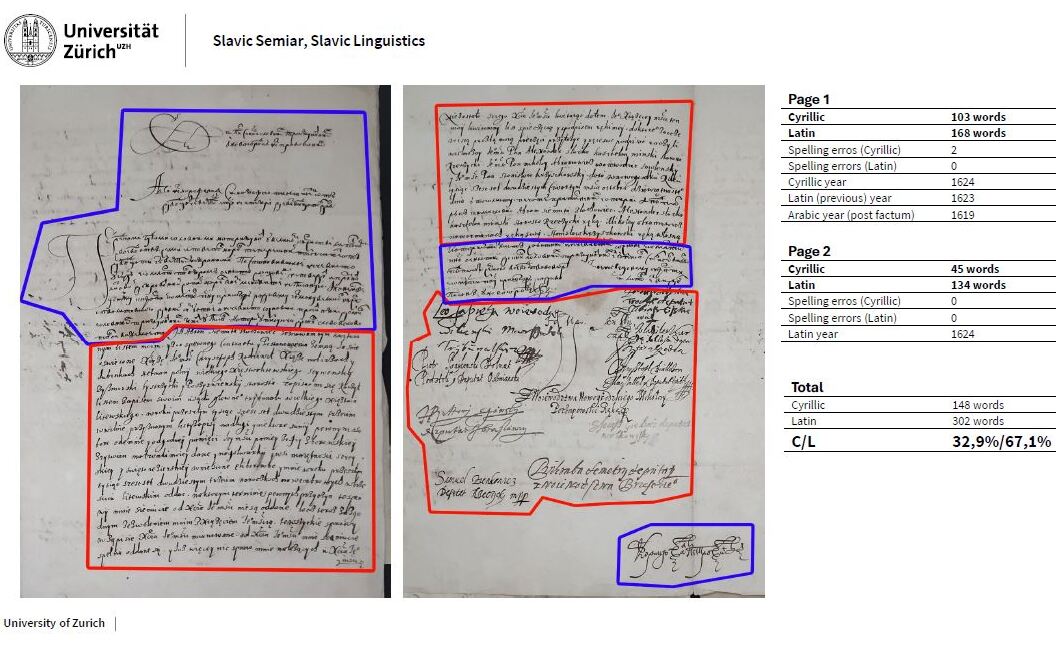
While satisfactory results had already been achieved for Polish, the examination of the Ruthenian documents—attributed to the Polish-Lithuanian statesman Lew Sapieha (1557–1633)—highlighted a technological research gap: specific transliteration models for this language stage are still lacking. The analysis revealed complex practices of code-switching and biscriptality (alternation between Latin and Cyrillic scripts), which challenge both established philological assumptions and digital cataloguing strategies. An additional outcome was the identification of a previously overlooked 450-page Russian diary (1918–1921) at the University Library of Bern, written during a stay in Switzerland. The results, positively reviewed internationally, including at the PIASA Annual Polish Studies Conference at Columbia University, now serve as a solid foundation for a large-scale follow-up project on the digital cataloguing of East Slavic collections. Currently (as of April 2026), the initiative is in the phase of negotiating collaborations between leading researchers and organizations in Switzerland, Sweden, and Germany.
Technical Tools
- Transkribus Expert Client
- ScanTent by Read-Coop
Usage Options
The data are used for training Ruthenian transliteration models. Further uses are possible but must be discussed individually with the Polish Museum Rapperswil, especially for applications outside the project.