Open Editions Workshop: Named Entities
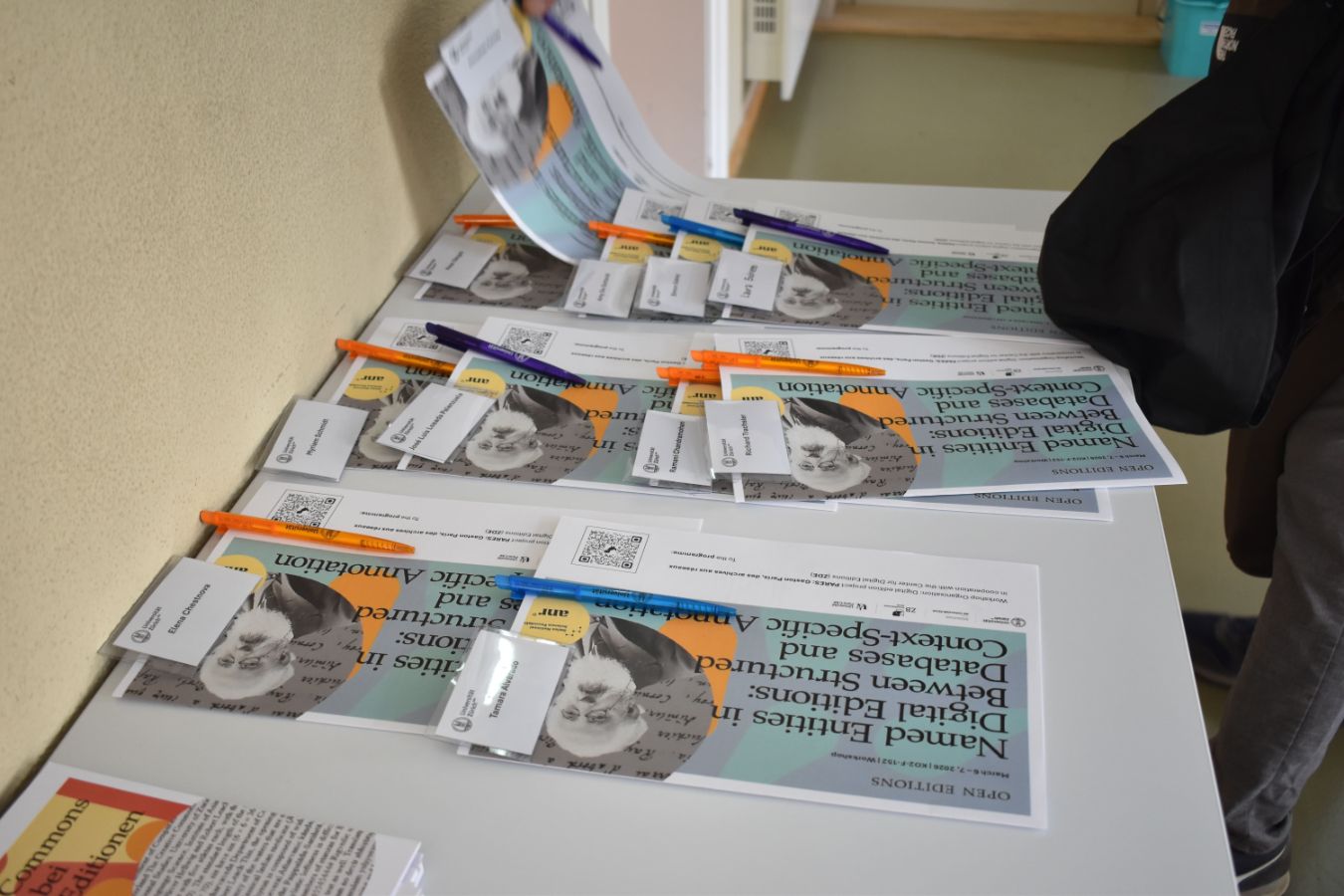
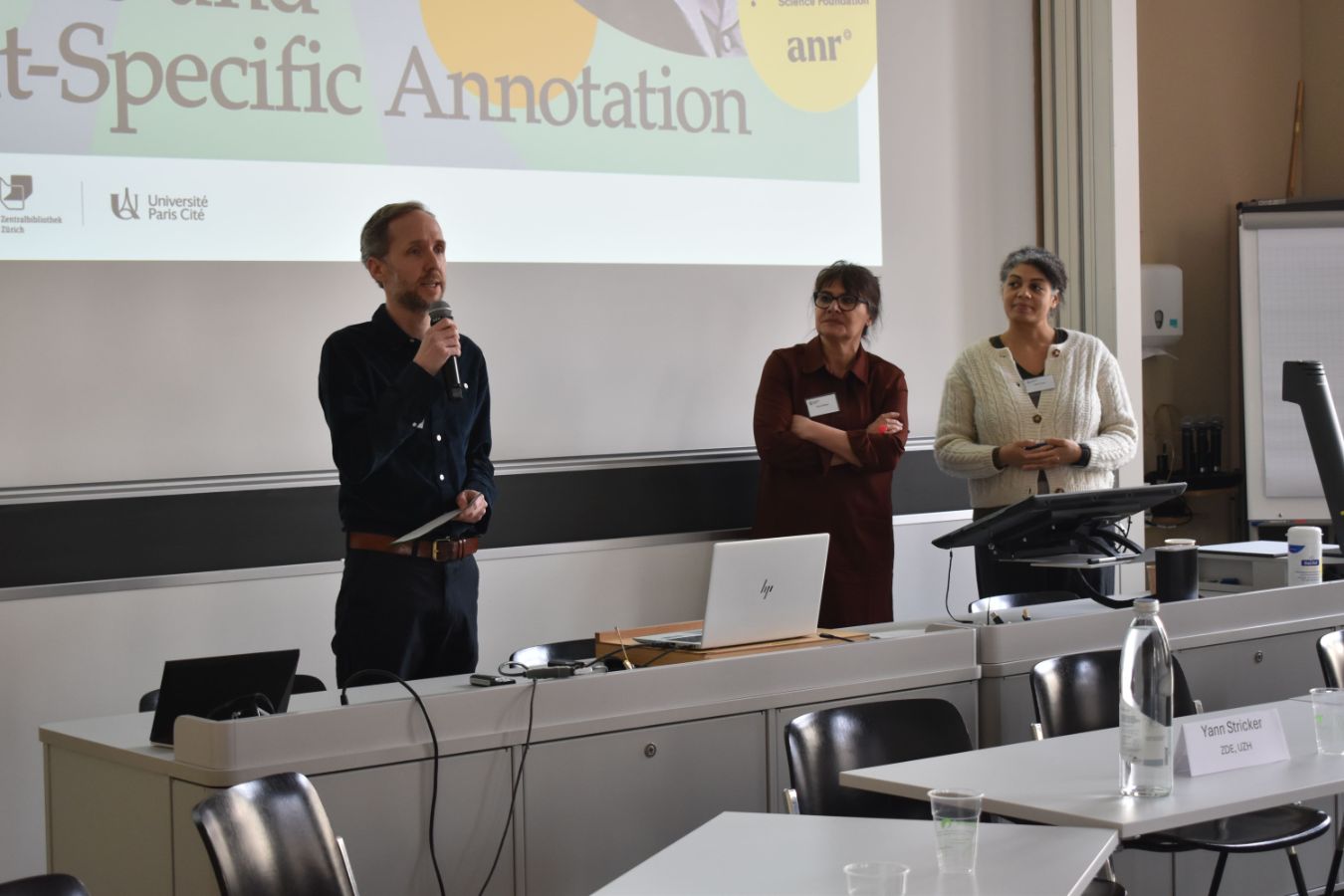
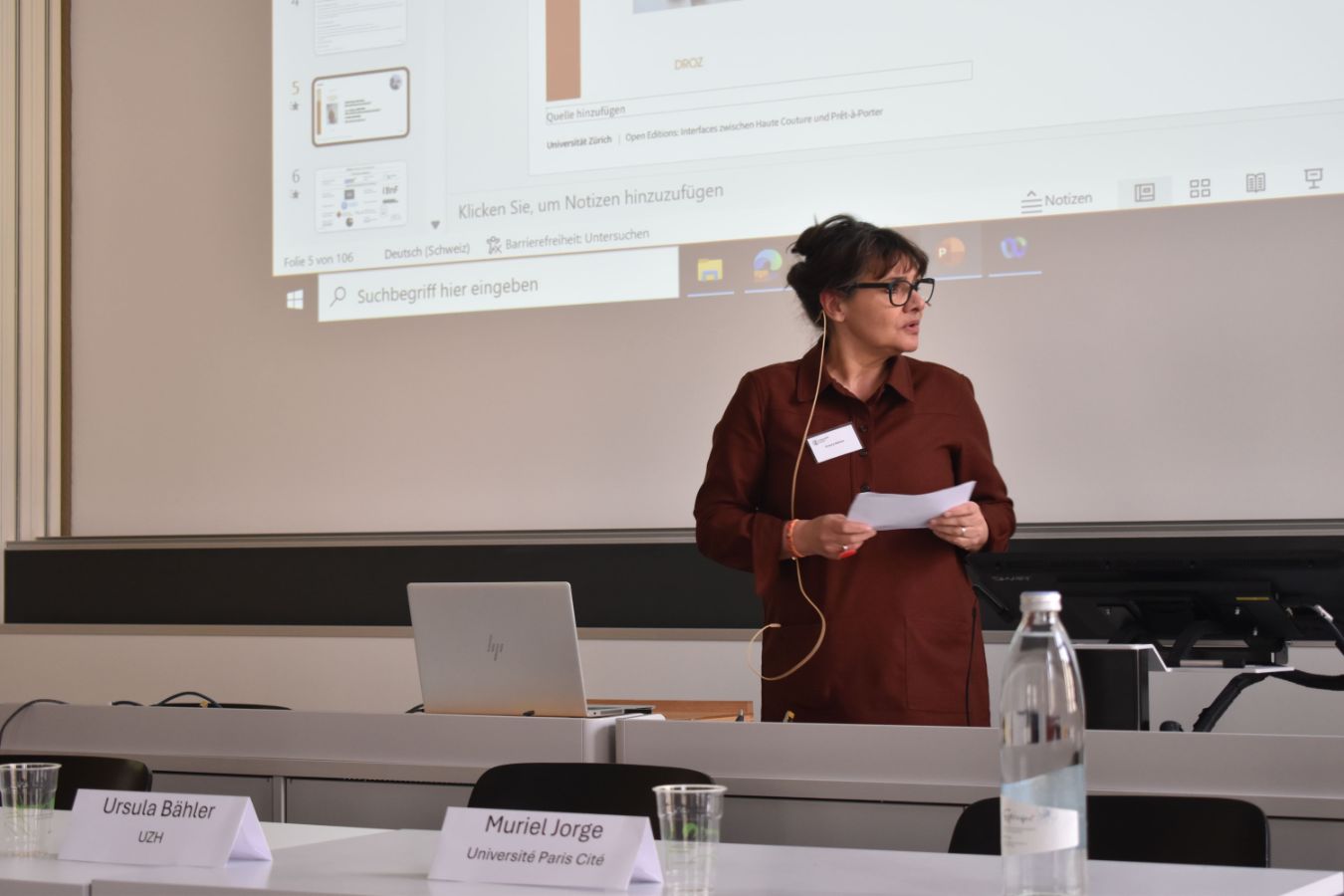
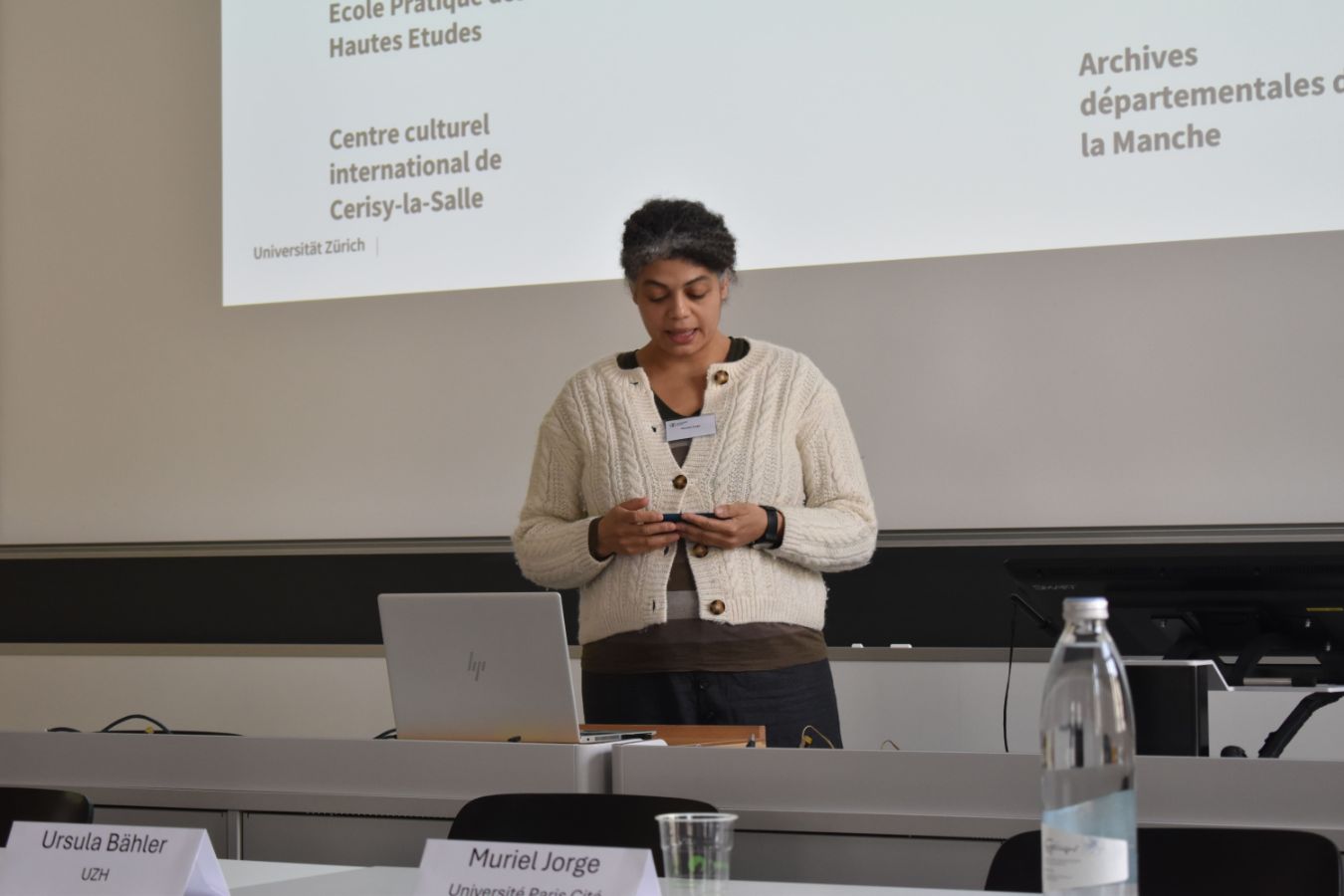
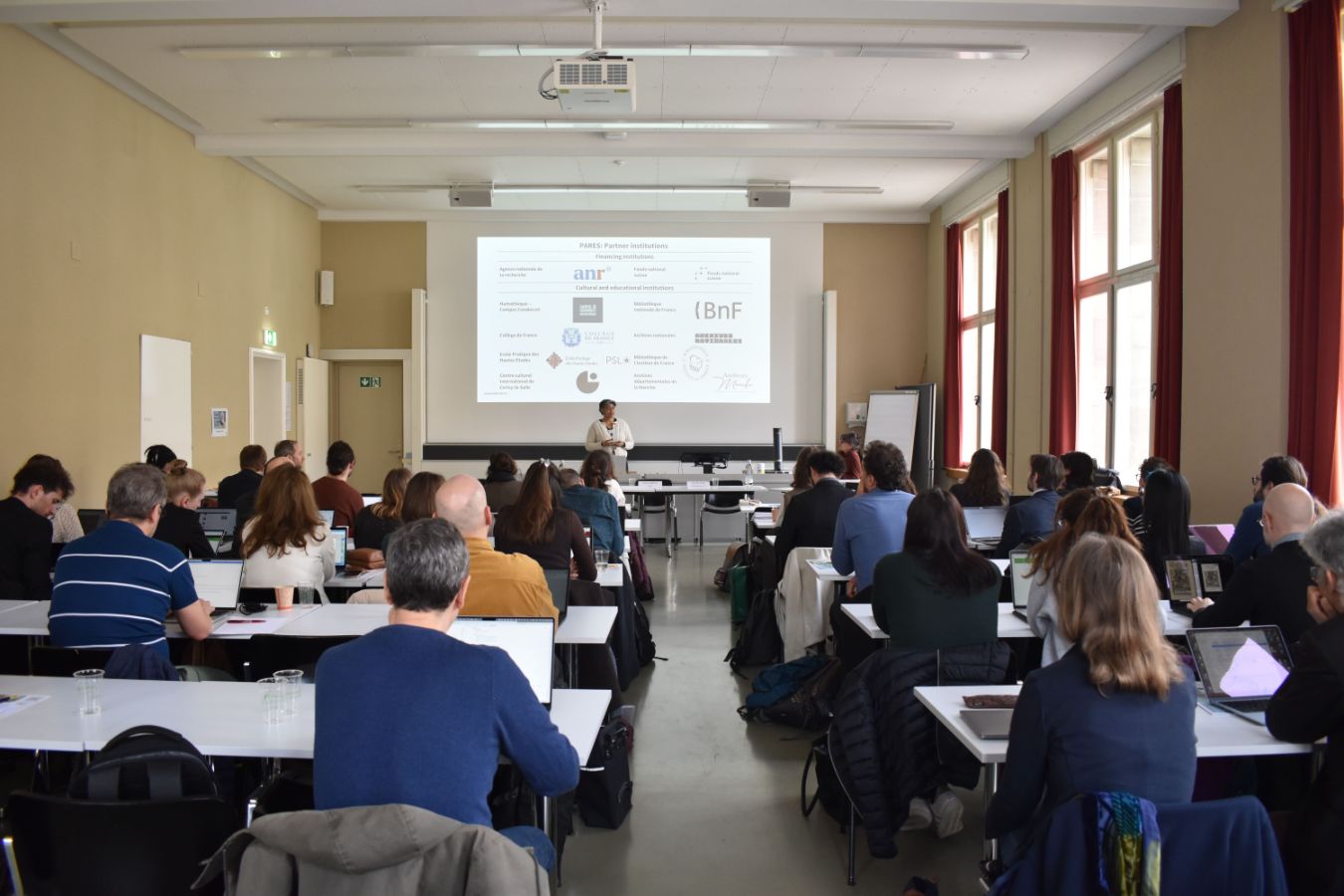
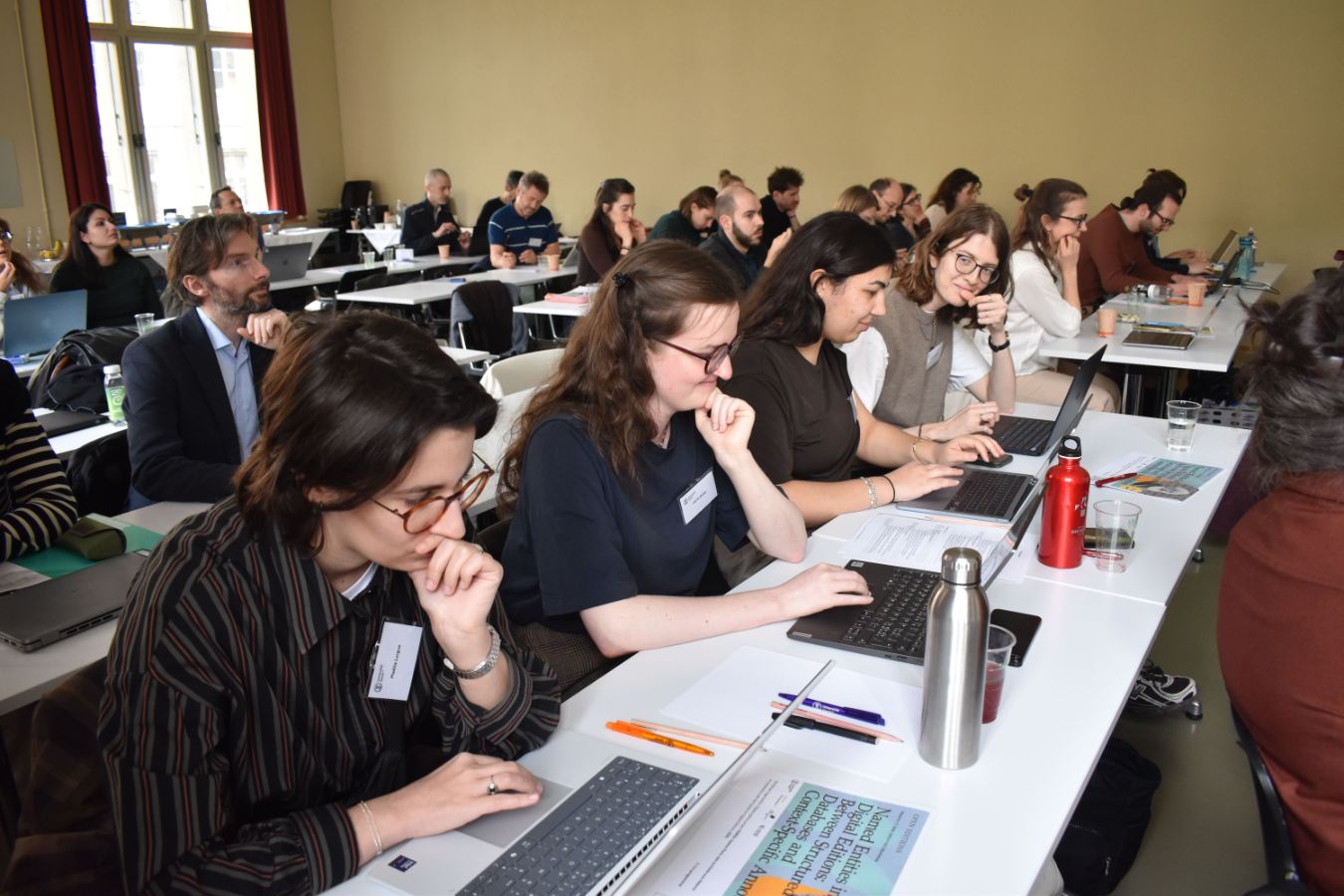
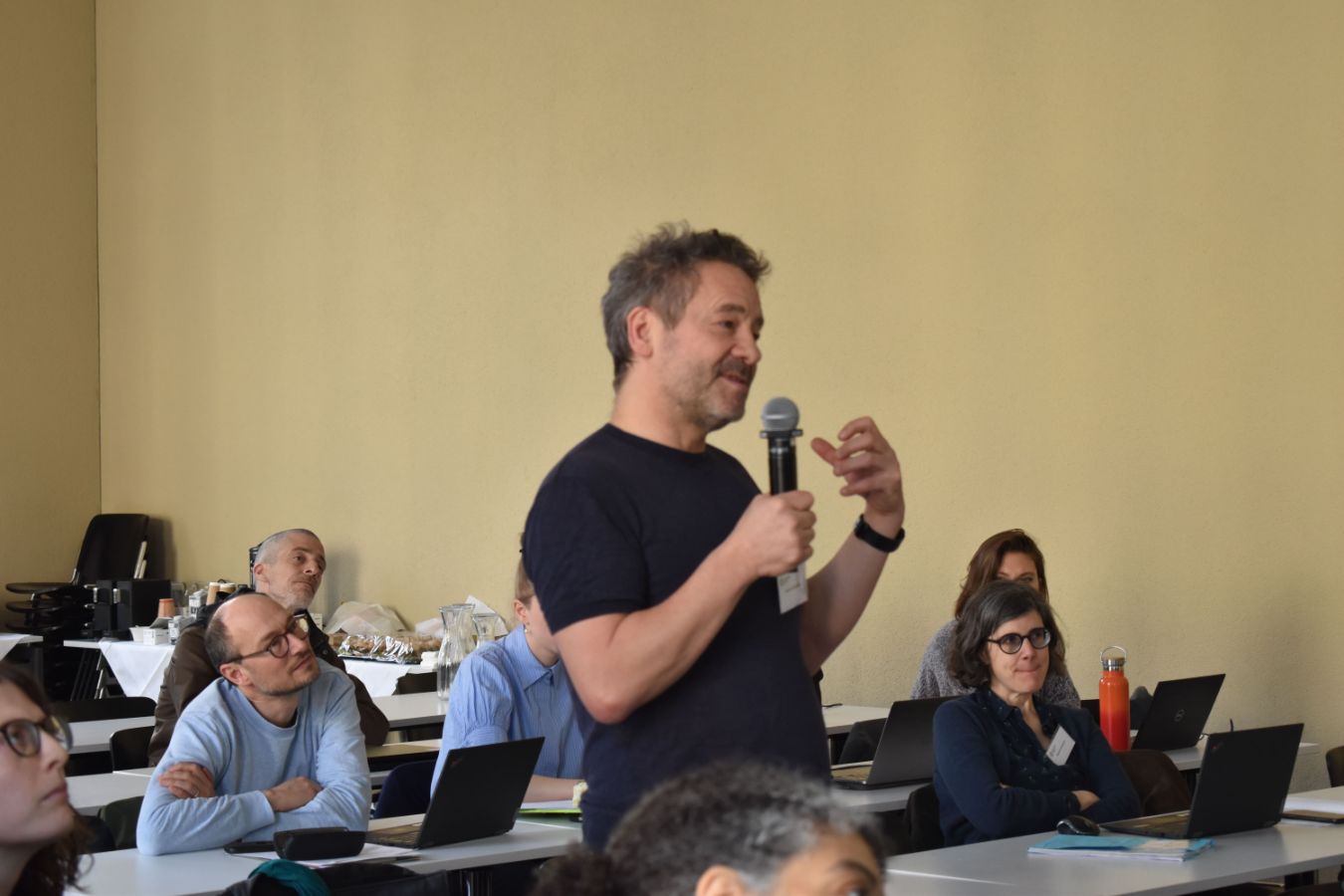
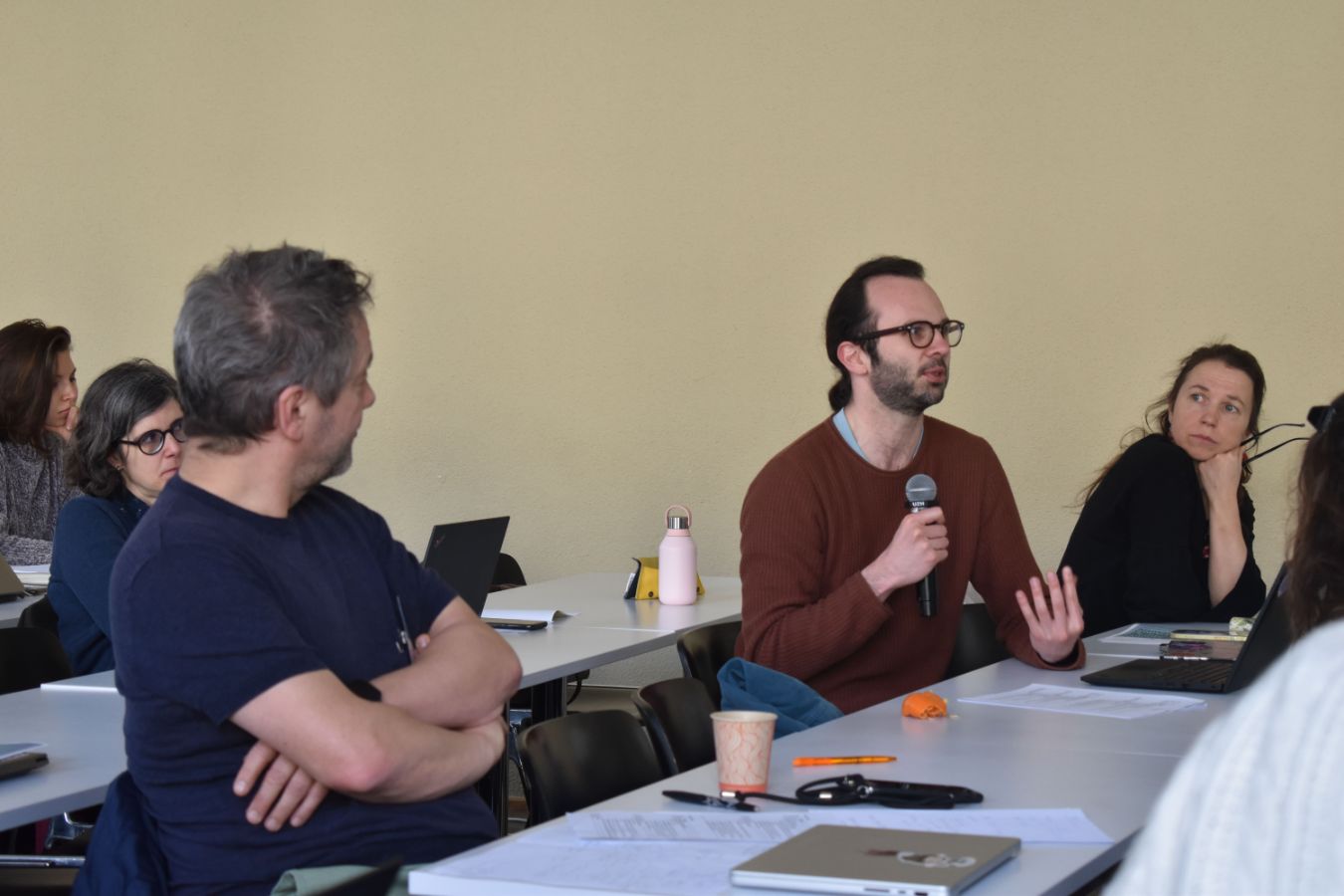
On March 6 and 7, 2026, the third workshop in the Open Editions series took place at UZH. Organized by the digital edition project PARES in cooperation with the Center for Digital Editions, around 40 representatives of the digital editing community discussed issues related to named entities in digital editions, taking as their starting point the specific research questions of the binational PARES project.
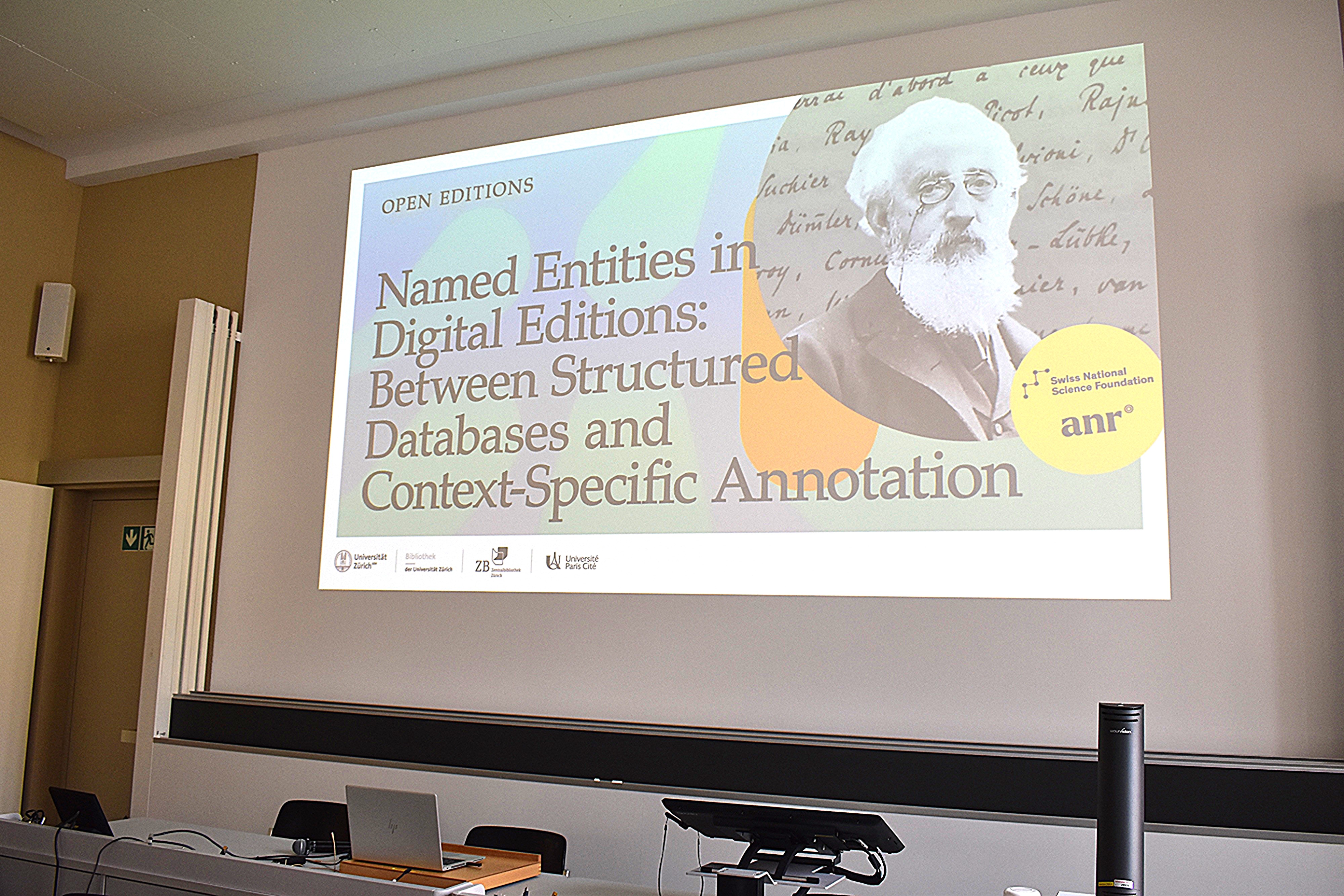
Named Entities in Digital Editions
The labelling of named entities in historical texts is one of the central tasks of digital edition projects. Considerable effort is often made to clearly identify such entities – whether persons, places, works, events, or plants – and to enrich them with additional, context-related information (metadata). Projects face the challenge of meeting requirements for standardisation and unambiguous identification, while also adequately reflecting historical complexity and doing justice to their own research perspective.
The Workshop
The workshop "Named Entities: Between Structured Databases and Context-Specific Annotation" approached the topic from various perspectives during the four roundtable discussions:
- Entities and Networks: Four edition projects expressed their views, addressing four key questions
- Infrastructures: Representatives from libraries and research centers presented databases with a focus on Gaston Paris's sources
- Tools & Workflows: Representatives from digital editions projects and IT support departments presented solutions and challenges on Tools and Workflows
You can find an overview of the program on the following page: Open Editions-Workshop "Named Entities in Digital Editions: Between Structured Databases and Context-Specific Annotation"
If you are interested in the discussions that took place during the four roundtables, we recommend the conference report, written by Cécile Babey, Melike Tursun, and Stéphanie Weber from the PARES project and available at the following link: Workshop Report: Named entities in digital editions: Between structured databases and context-specific annotation
All presentation slides are available for viewing and download on the ZDE’s Zenodo community: https://zenodo.org/communities/zde/records (filter "Named Entities").
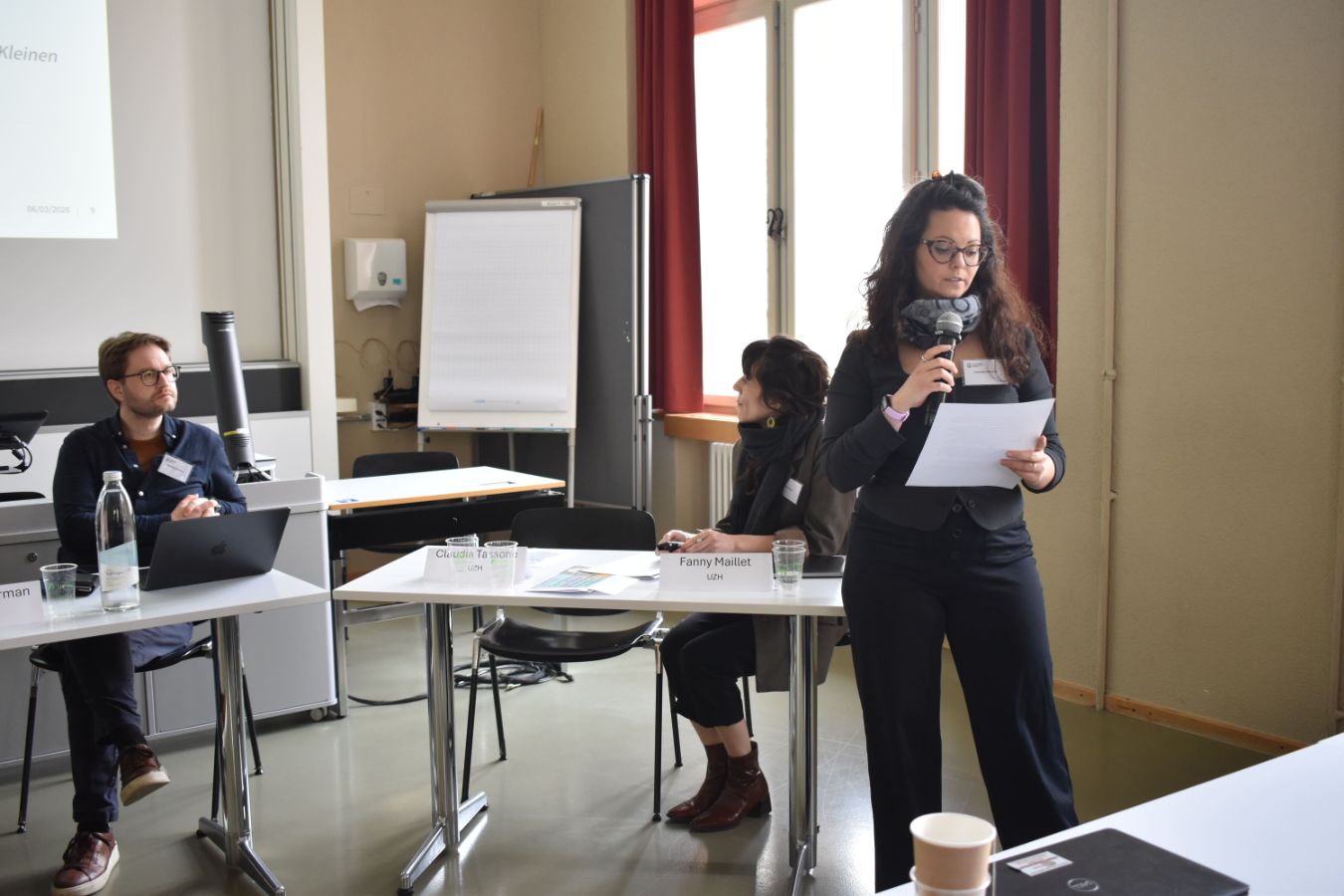
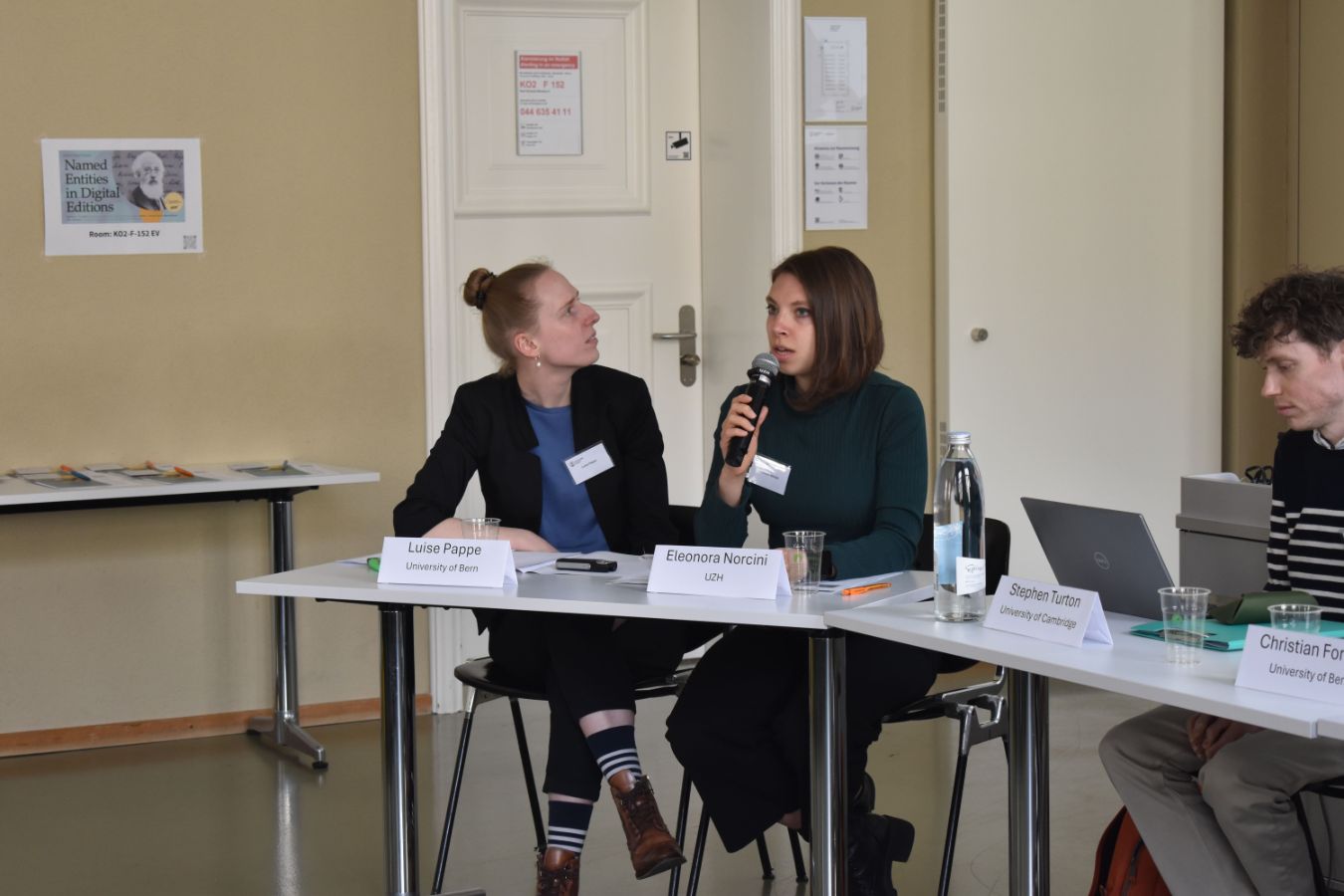
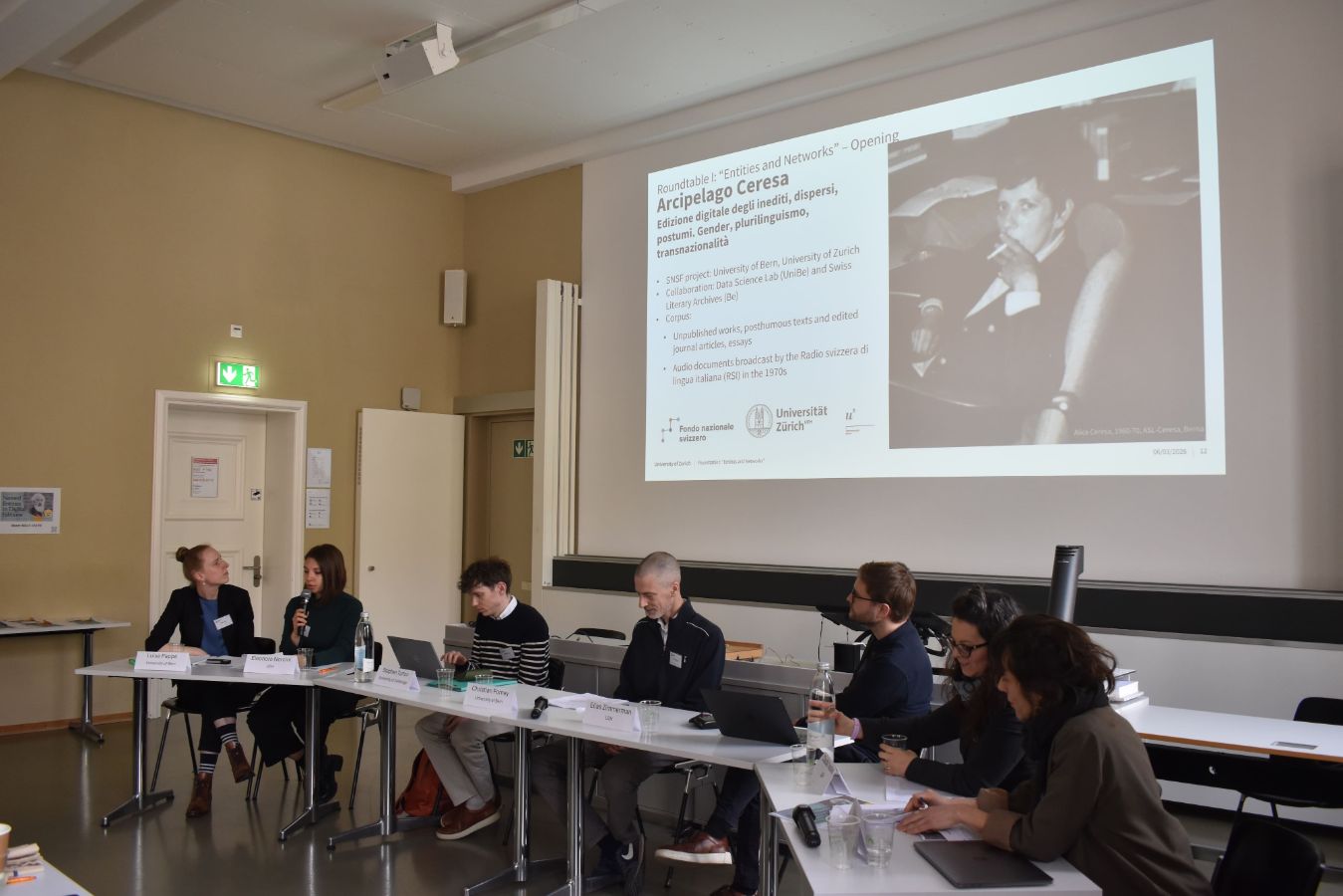
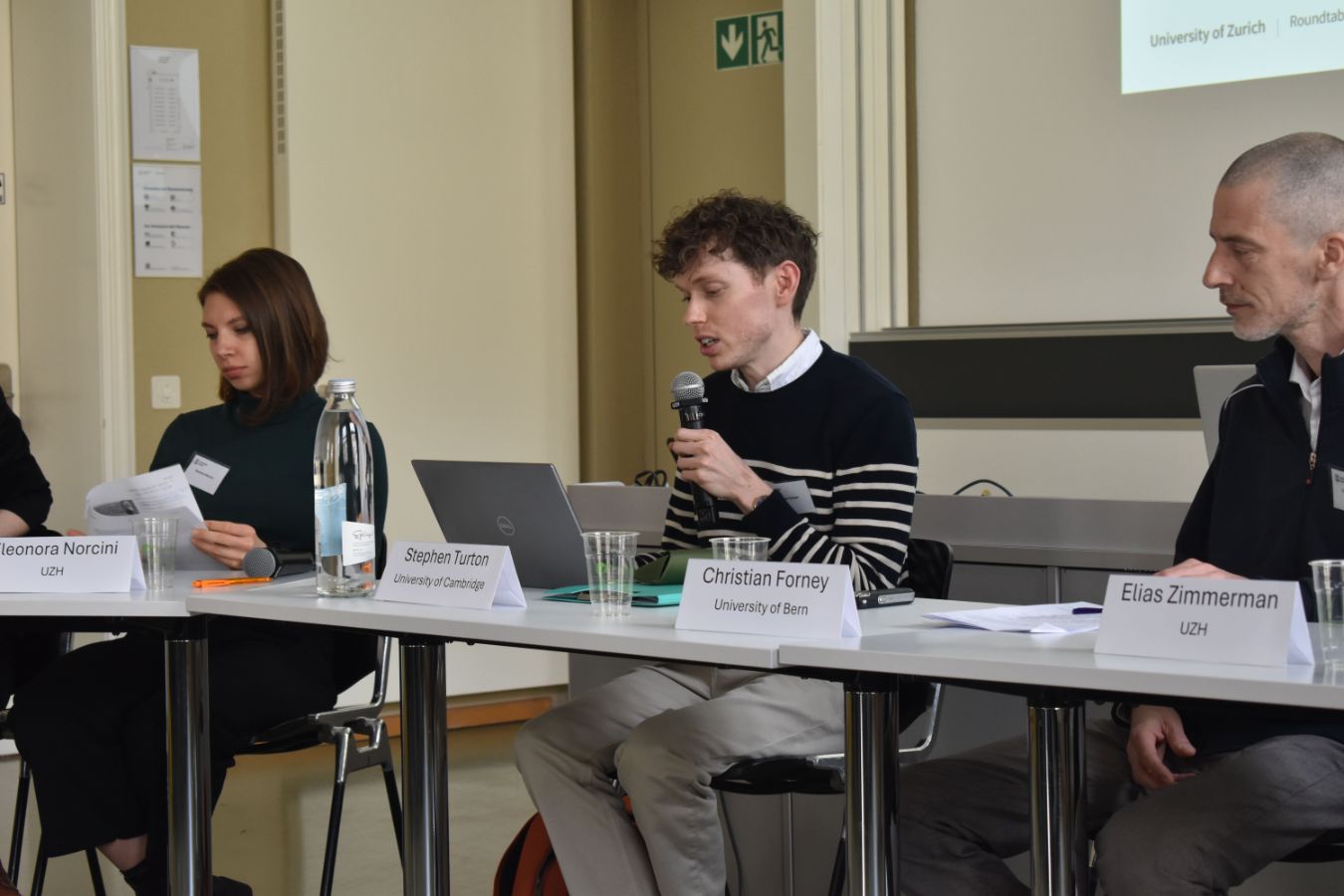
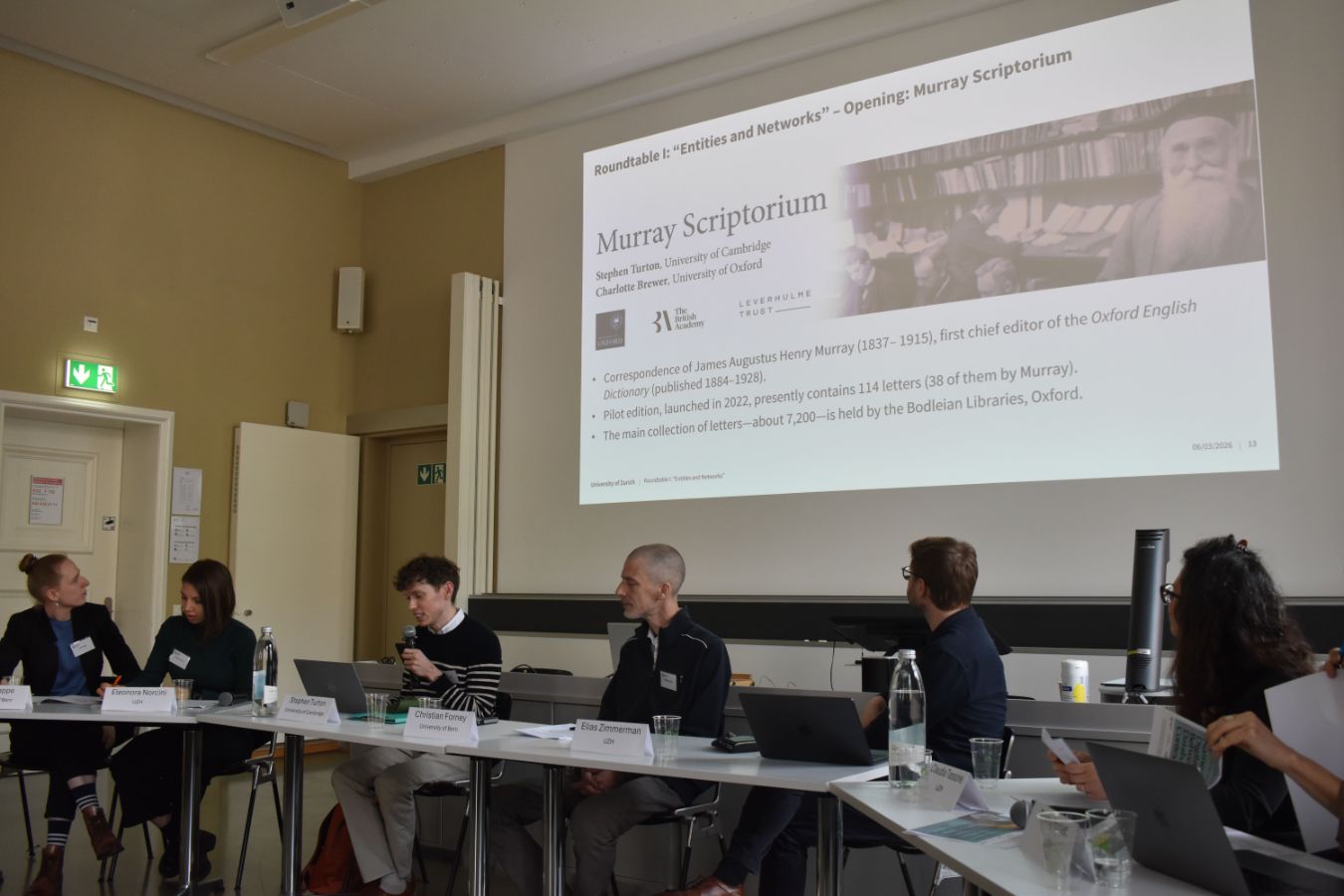
Roundtable Entities and Networks
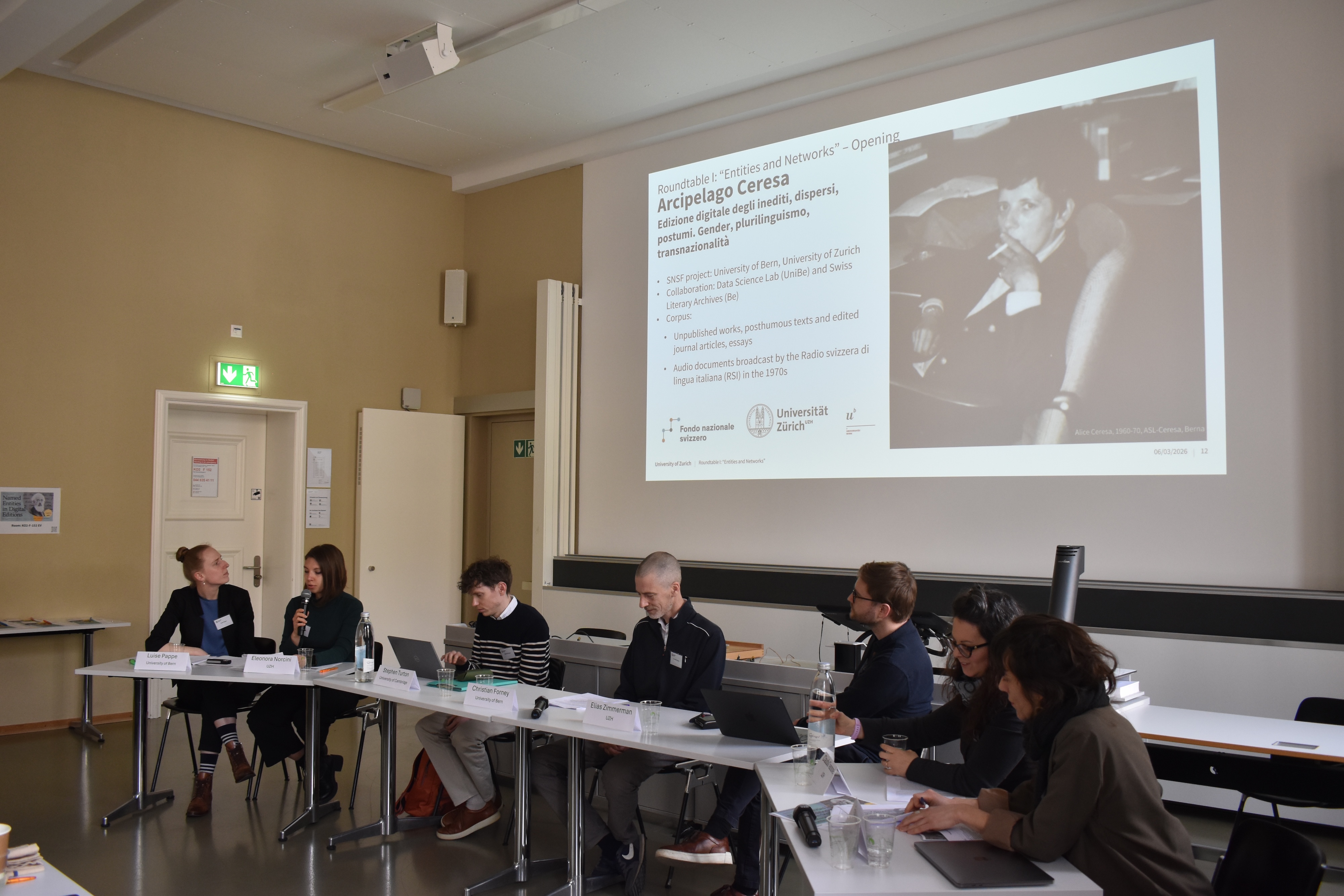
After a joint lunch, representatives from the four digital edition projects
- Arcipelago Ceresa: edizione digitale degli inediti, dispersi, postumi. Gender, plurilinguismo, transnazionalità
- Murray Scriptorium
- République des lettres
- Annemarie Schwarzenbach: Digitale Edition der Kleinen Formen und Briefe
discussed four key questions currently relevant to the PARES project.
An overview of responses, insights, and further questions can be found in the slides from this roundtable (and in the workshop report):
Roundtable "Entities and Networks": Four Questions for Four Research Projects
Roundtable Infrastructures
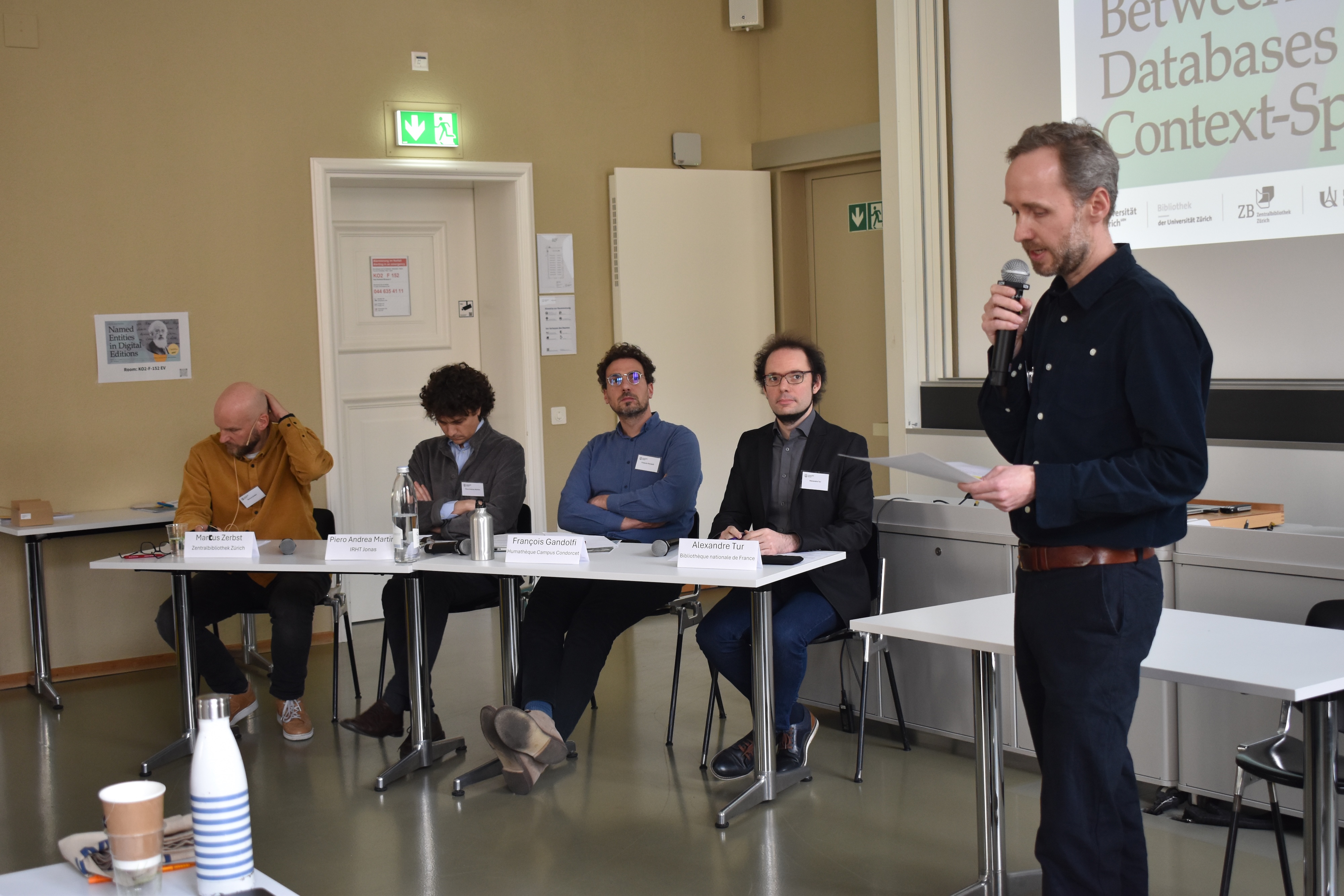
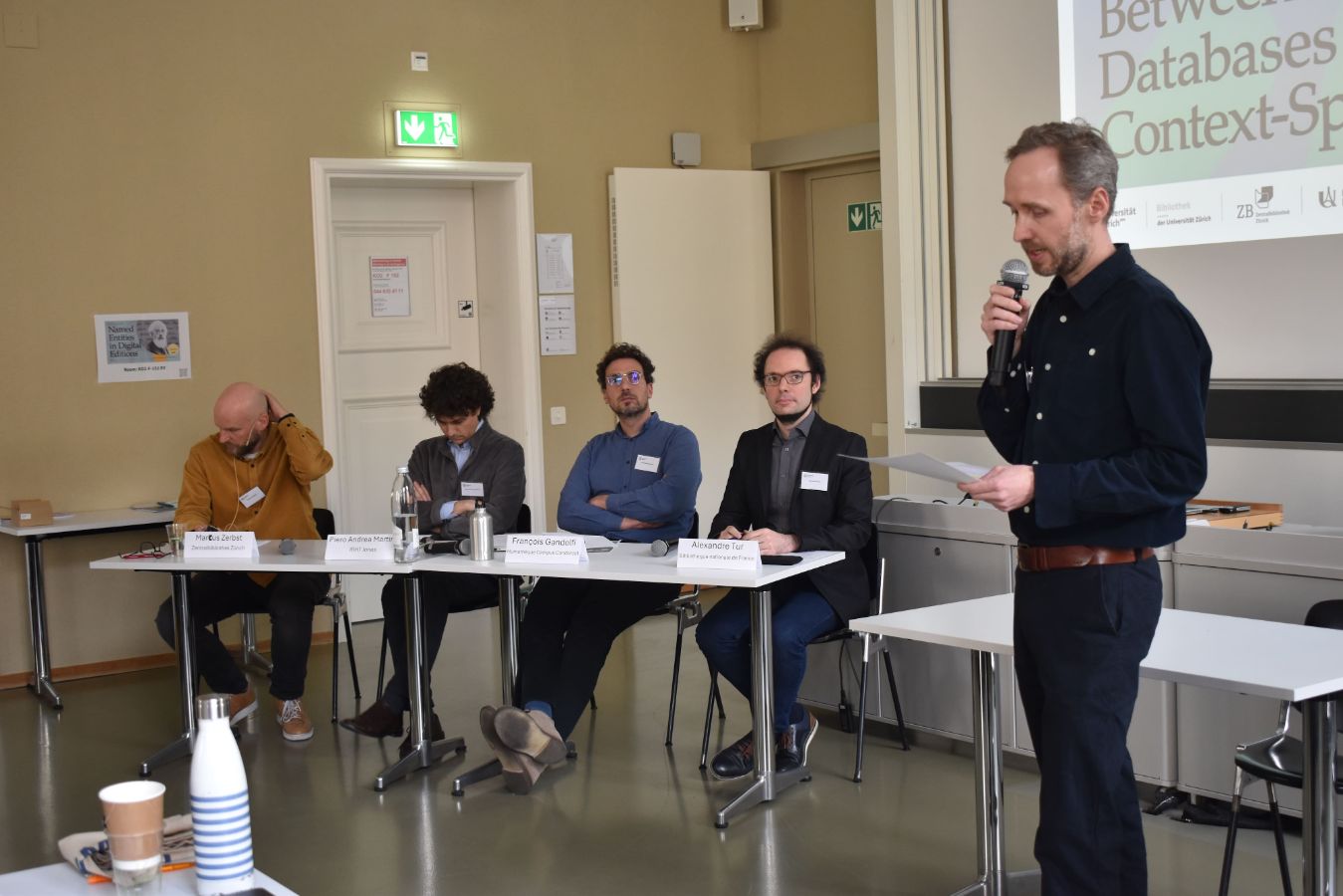
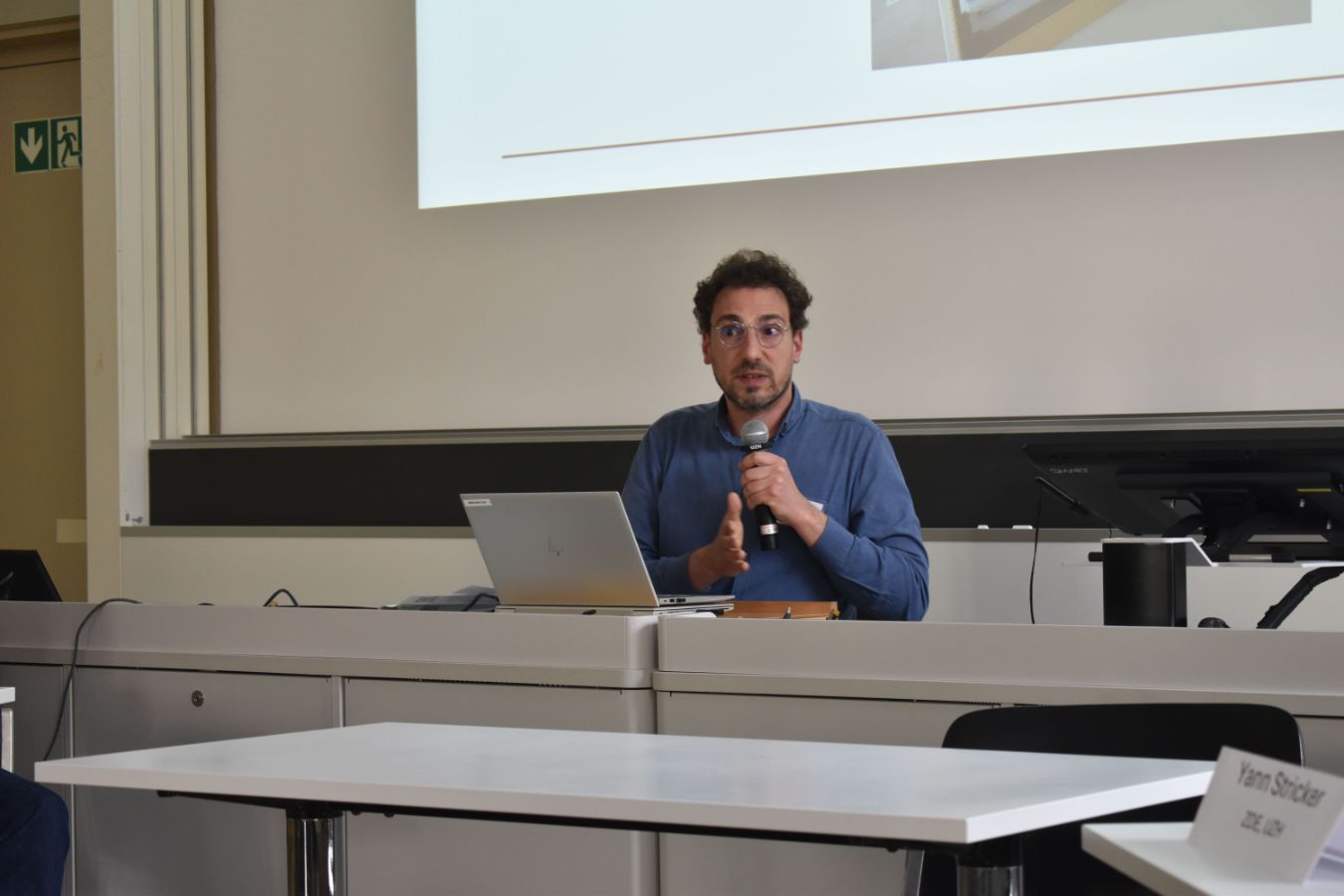
In the second roundtable, representatives of four research infrastructures relevant to PARES presented challenges and opportunities with a particular focus on named entities. These were:
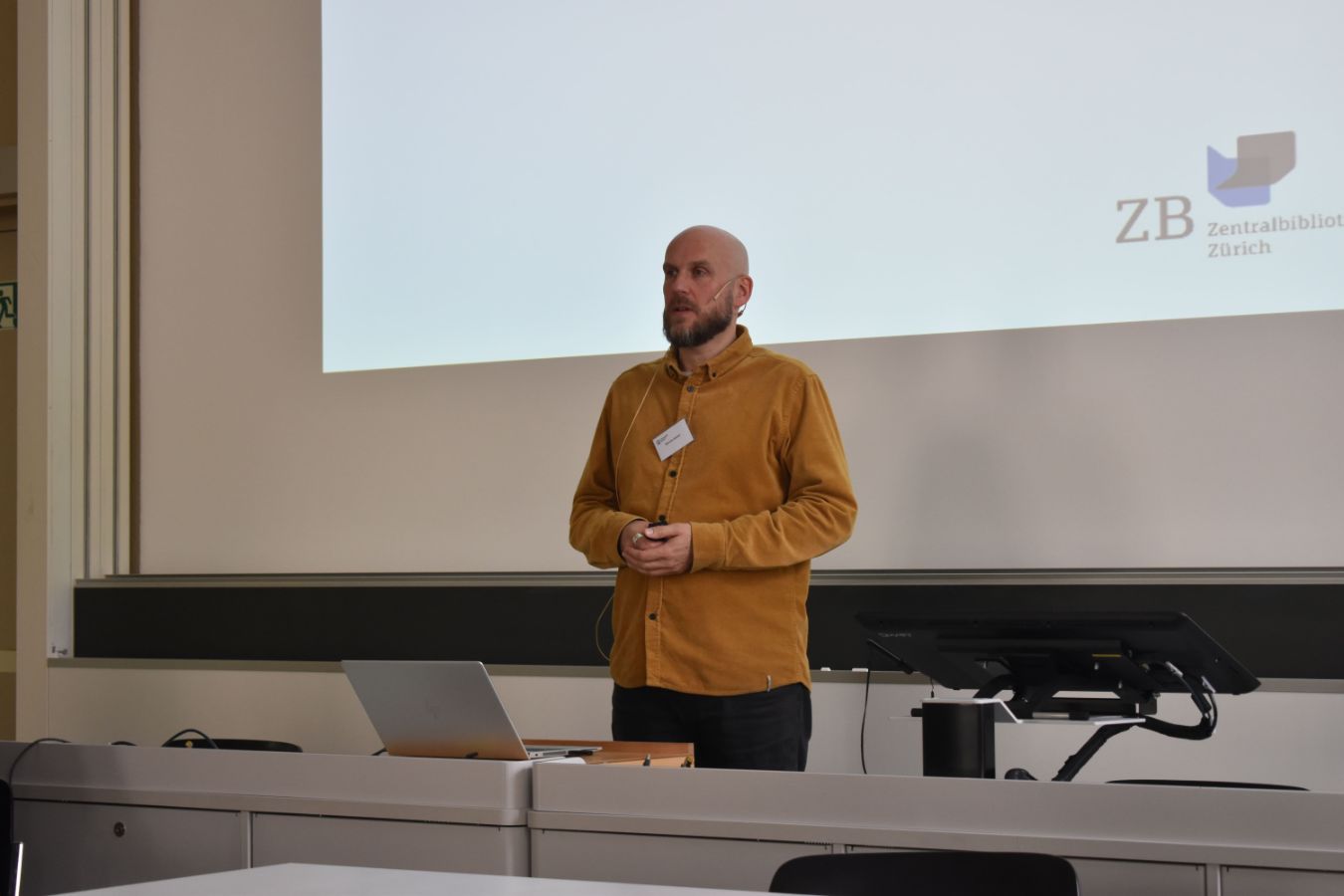
- Marcus Zerbst (Zentralbibliothek Zürich):Linking authorities – bonus or onus?
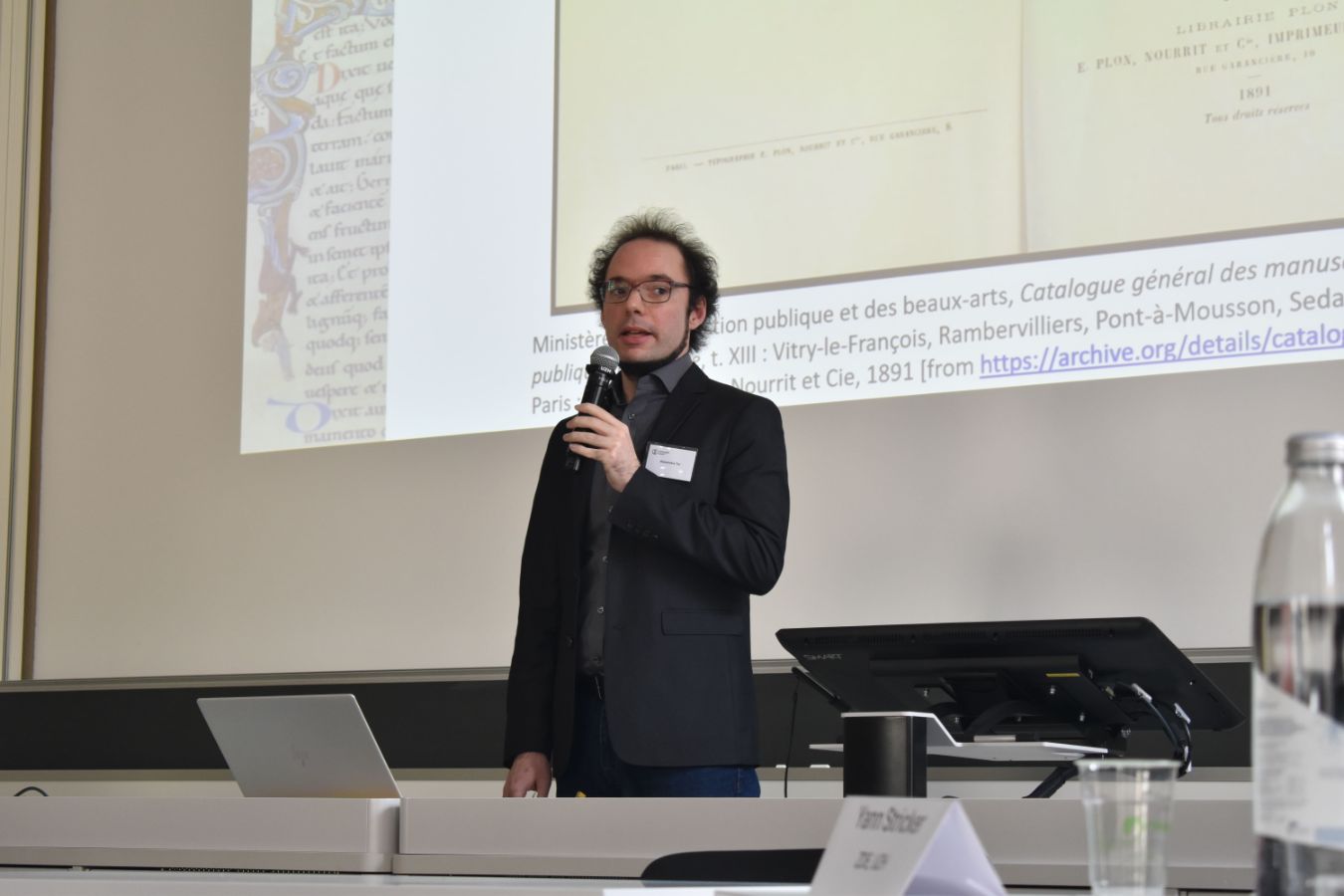
- Alexandre Tur (Bibliothèque nationale de France): In-text Indexing in XML/EAD French Manuscripts Catalogues
- François Gandolfi (Humathèque Campus Condorcet):Cataloging archival documents: interoperability and semantic web
- Piero Andrea Martina (IRHT Jonas)Répertorier textes et manuscrits français du Moyen Âge: JONAS
This exchange on infrastructures concluded the first workshop day.
Roundtable Tools
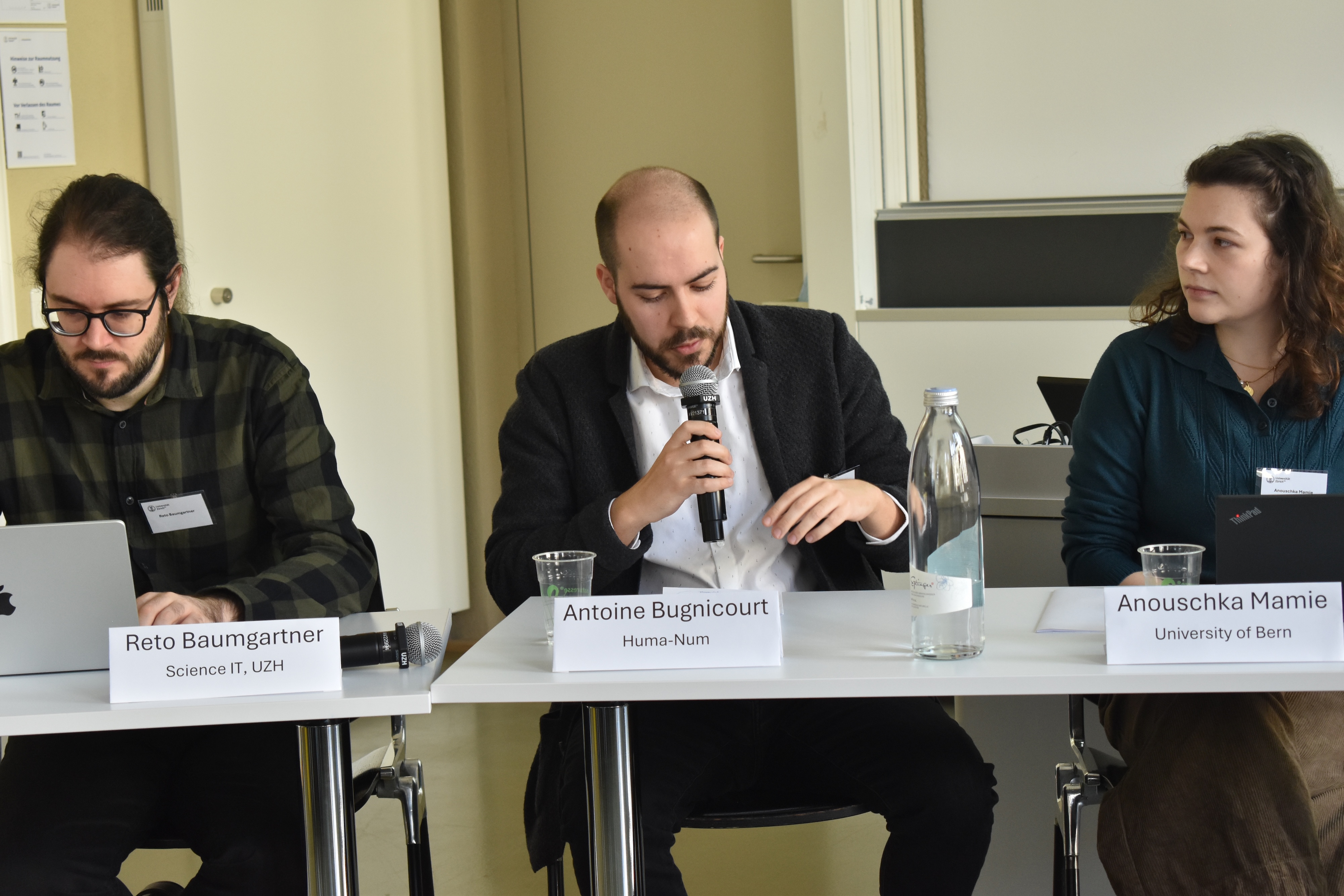
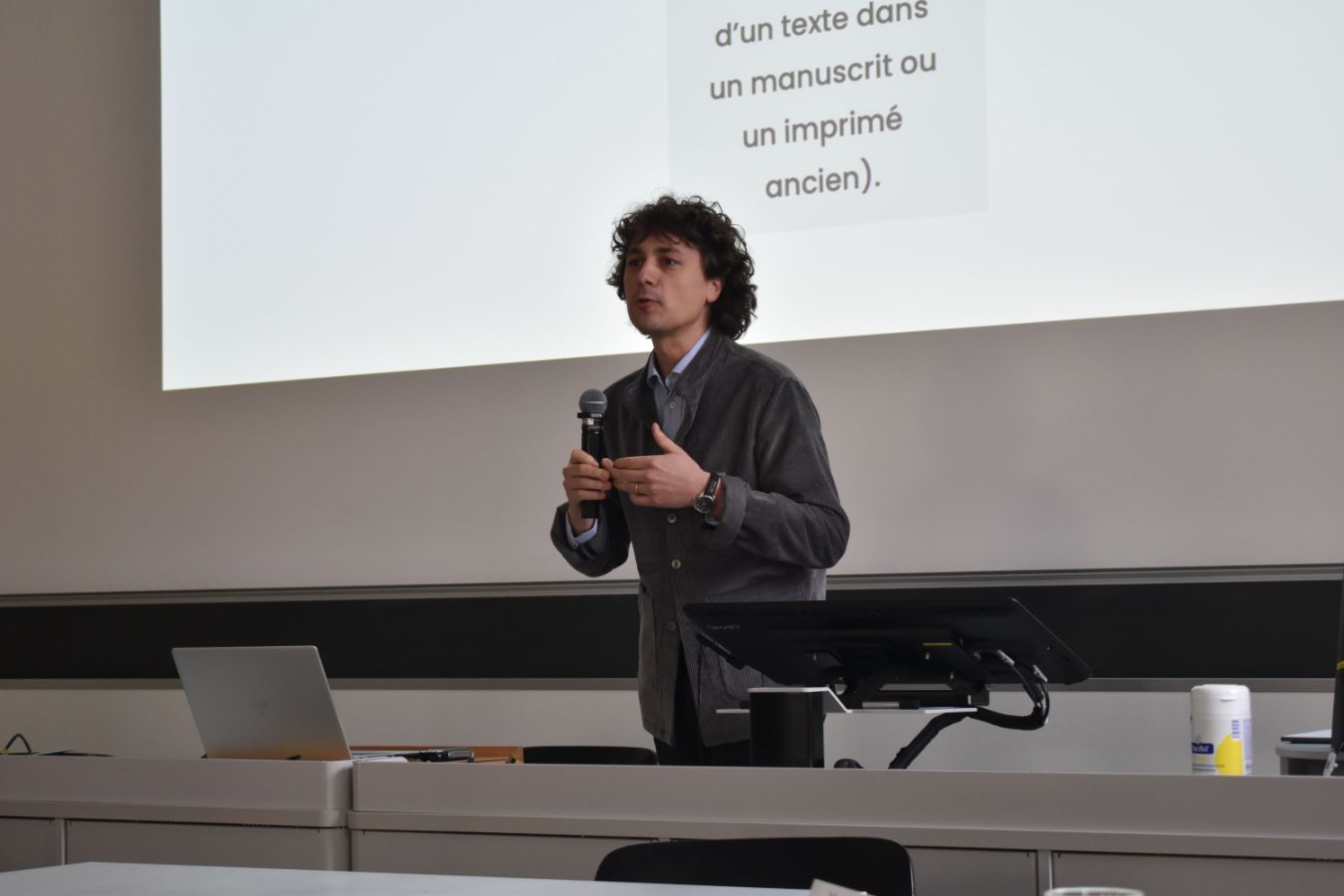
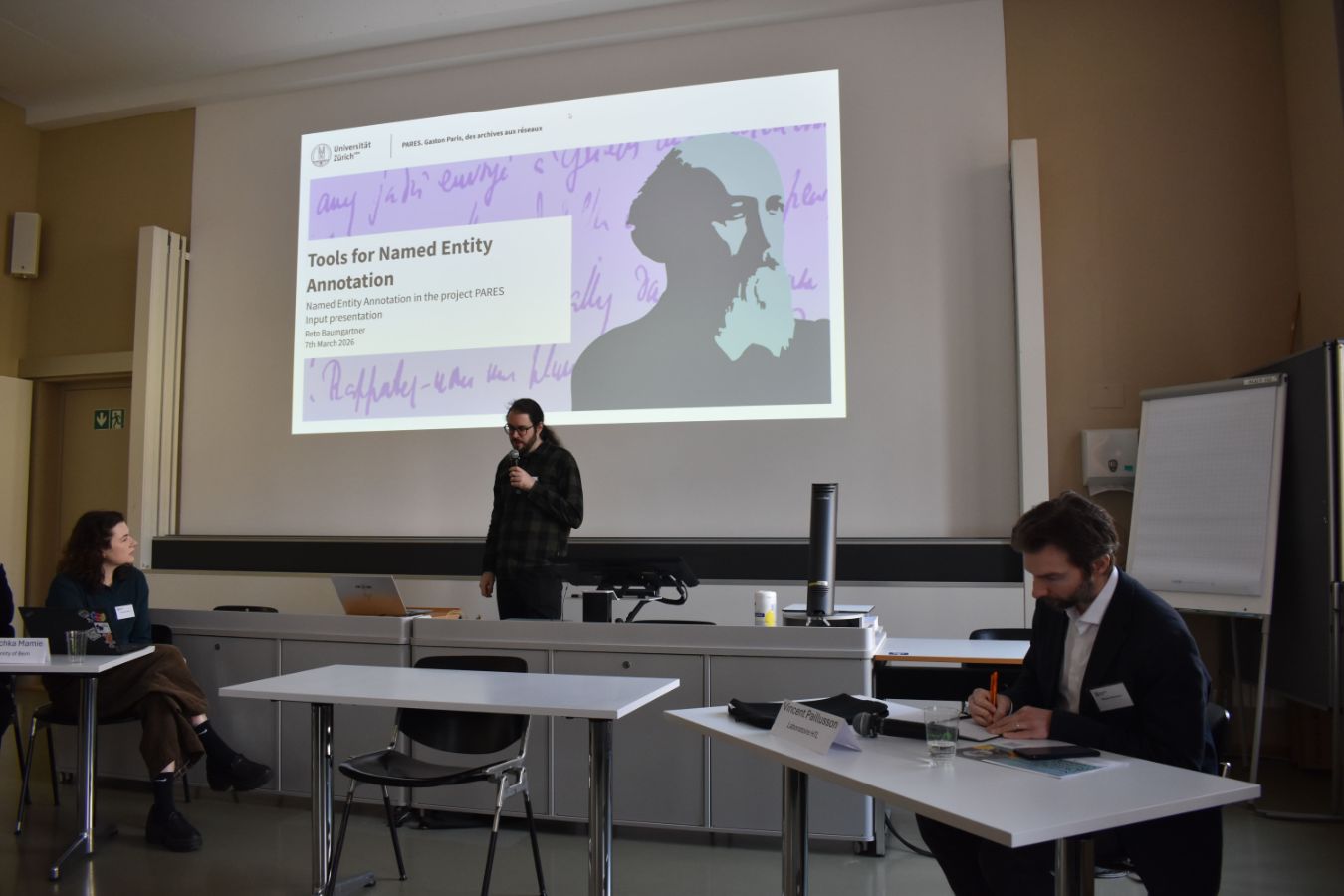
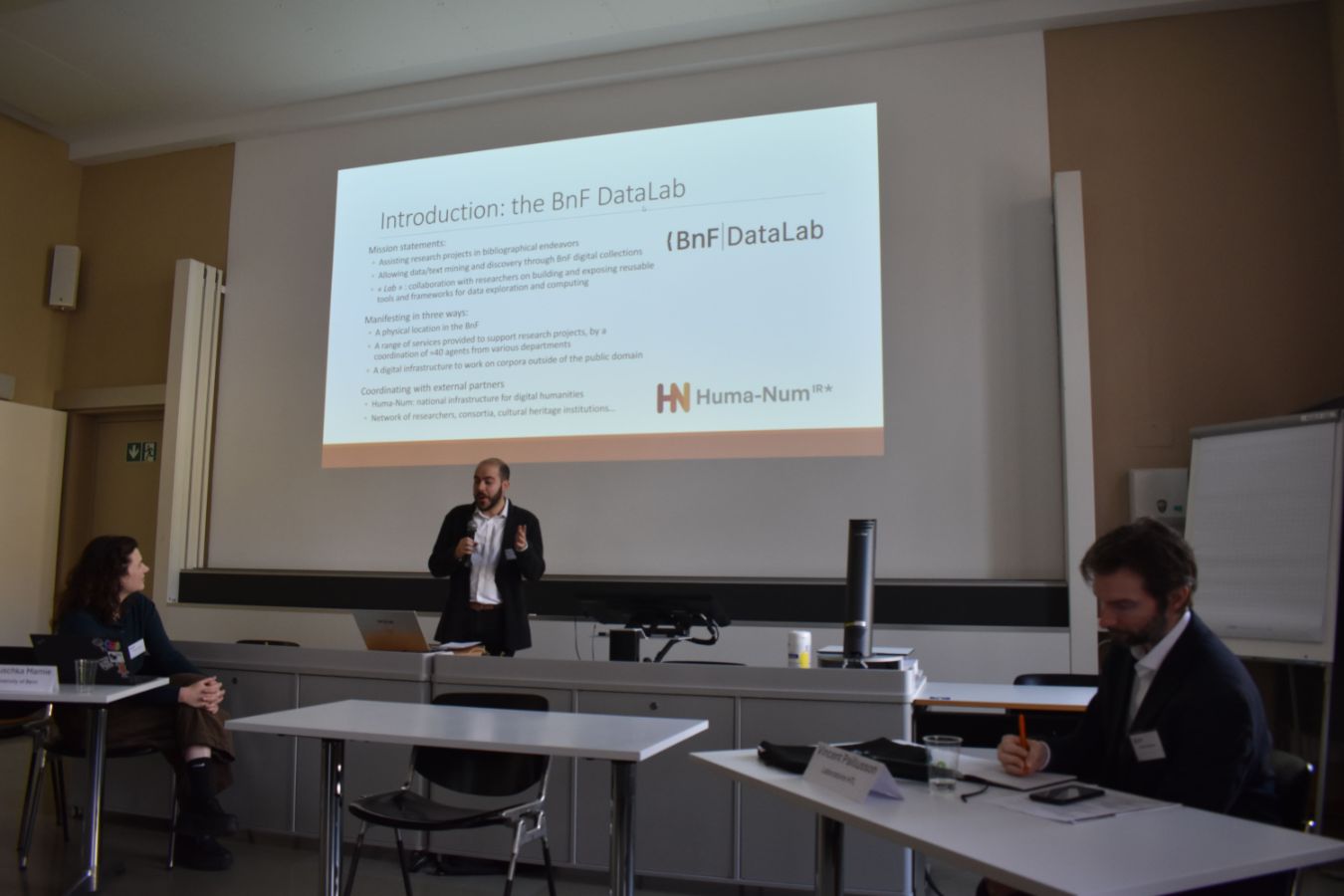
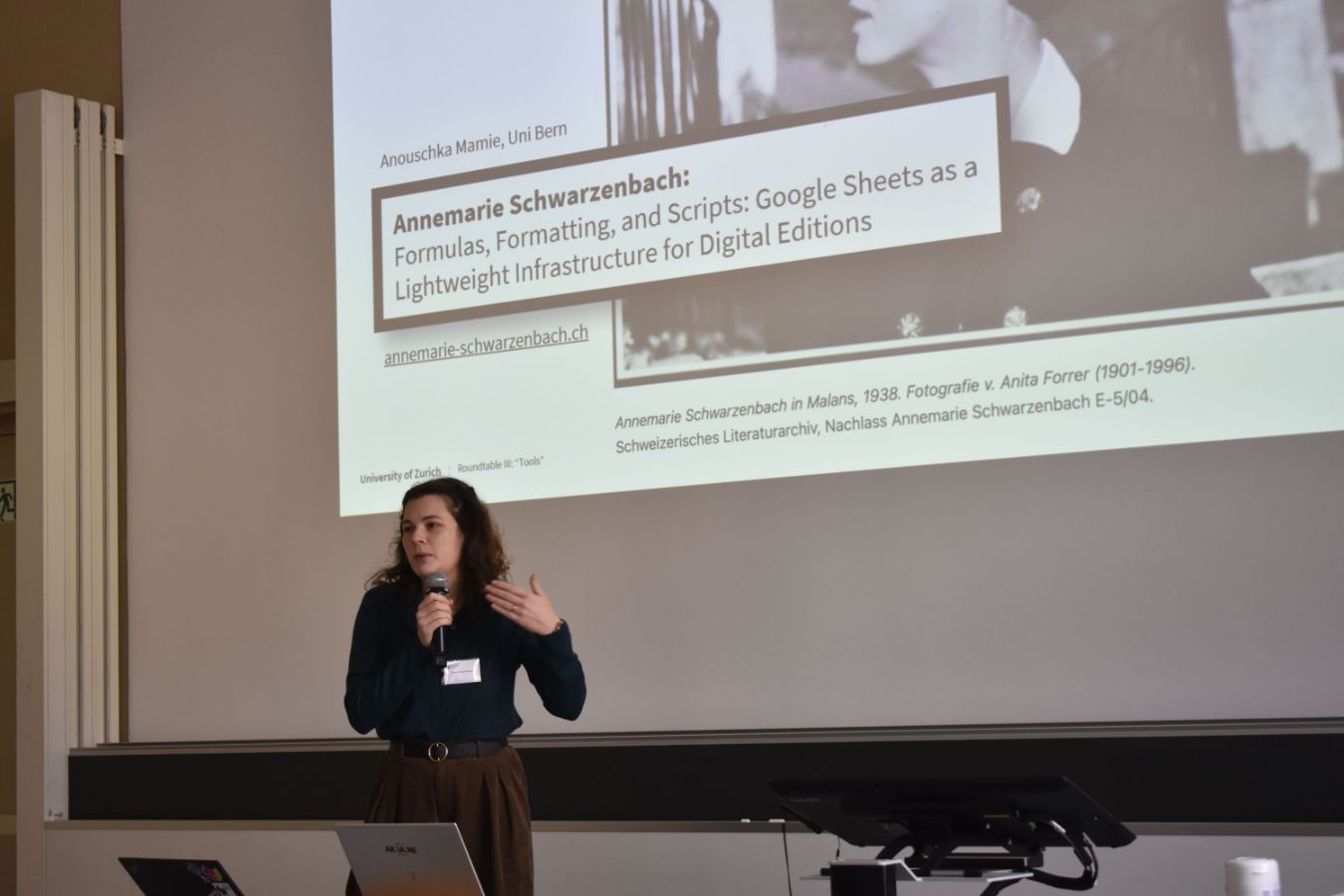
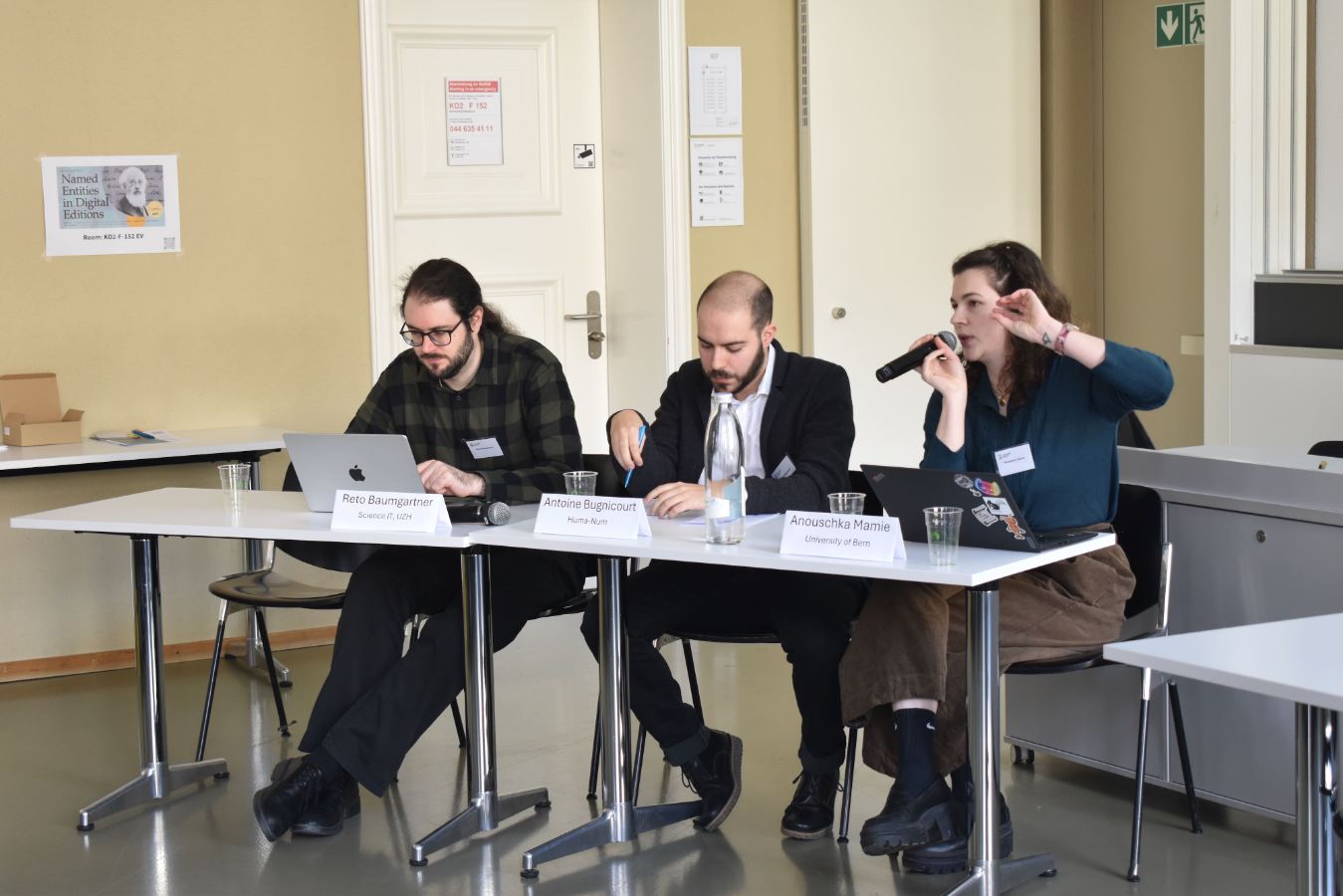
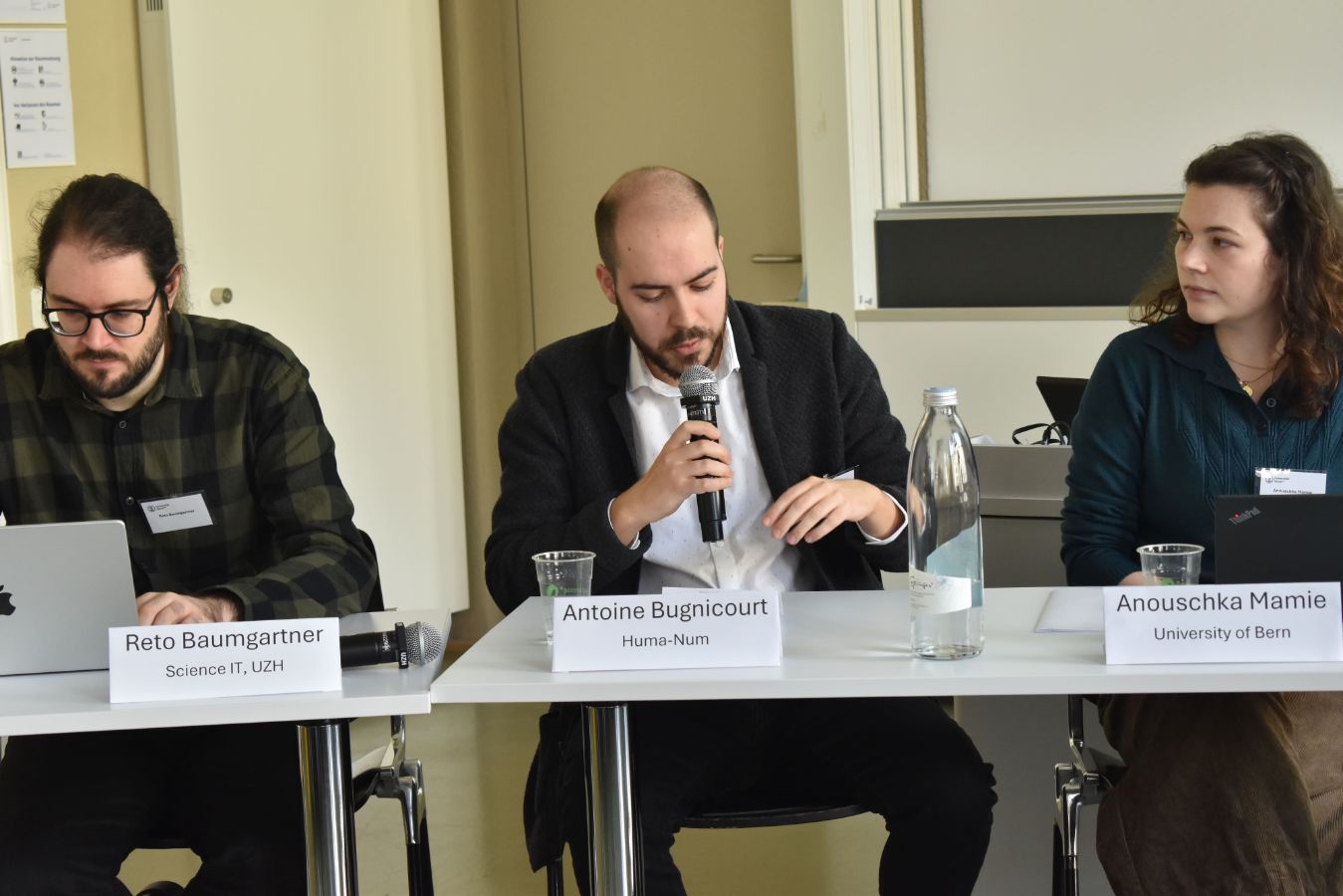
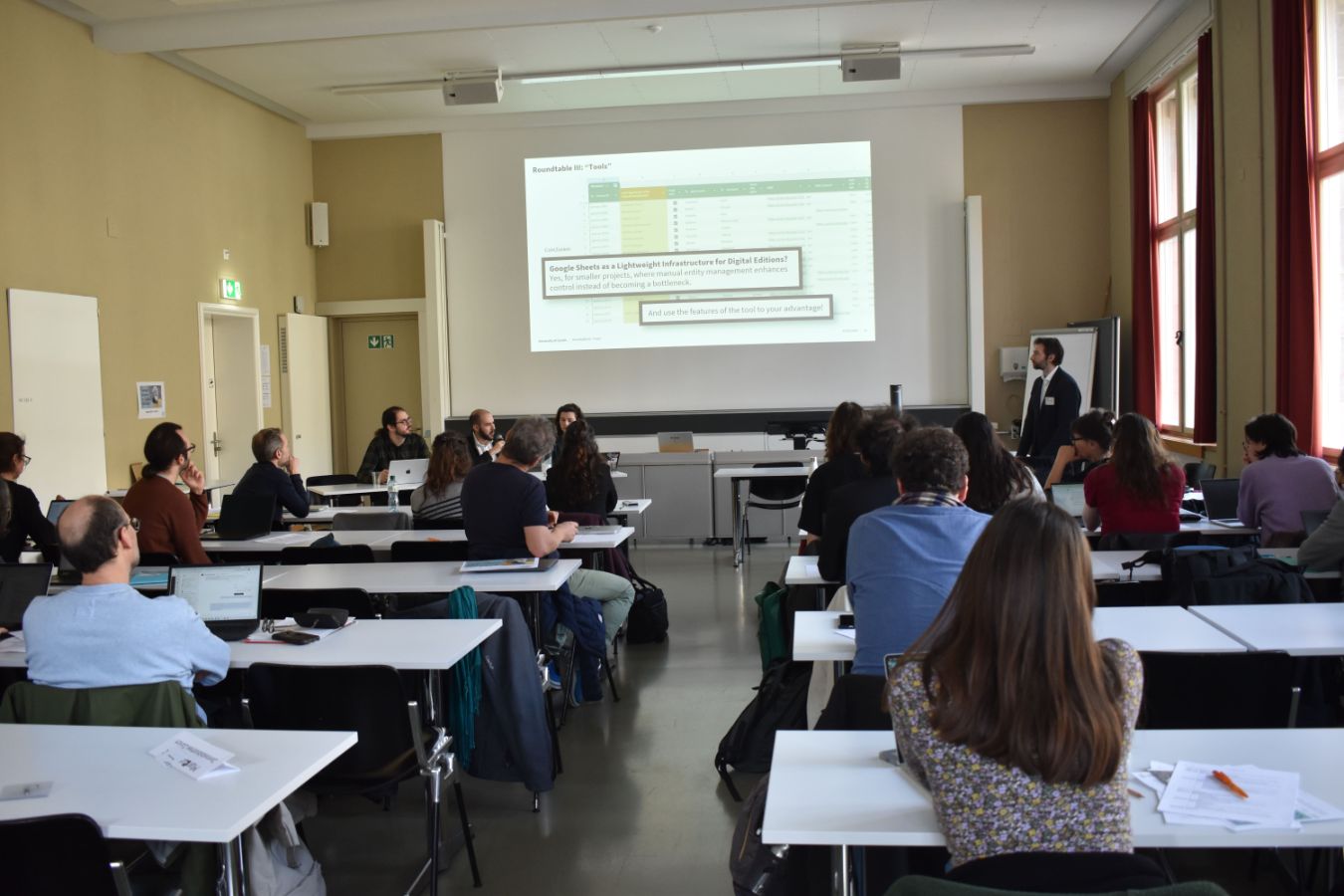
On Saturday, the workshop delved even deeper into the topic of named entities—starting with a roundtable discussion focused on tools. Each of the three presentations examined tools for indexing and managing information on named entities:
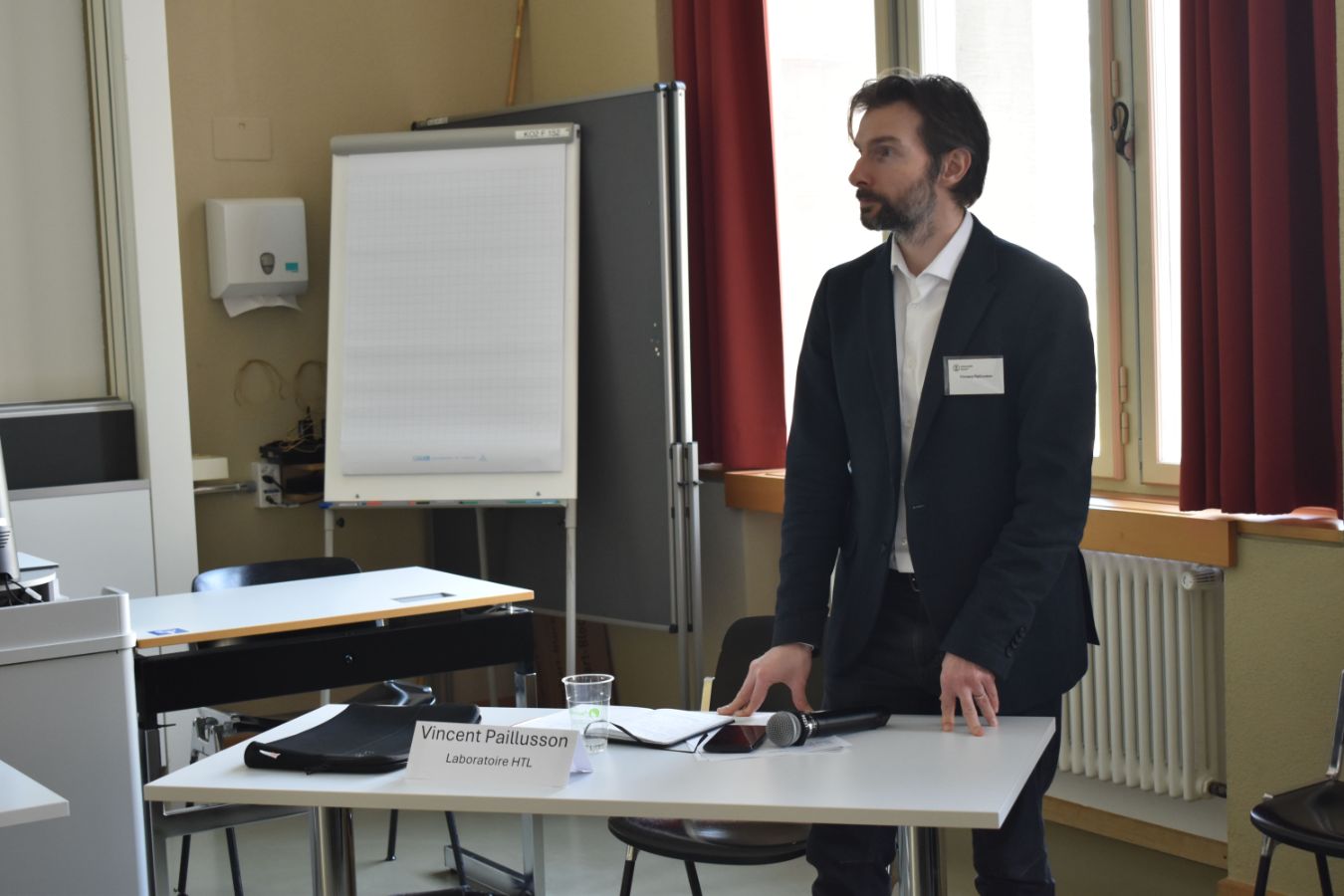
Chair: Vincent Paillusson
Reto Baumgartner (UZH, Science IT): Named Entity Annotation in the project PARES
Antoine Bugnicourt (Huma-Num): Corpusense et les collections d'annuaires numérisés à la Bibliothèque nationale de France
Anouschka Mamie (University of Bern): Annemarie Schwarzenbach: Formulas, Formatting, and Scripts: Google Sheets as a Lightweight Infrastructure for Digital Editions
Roundtable Workflows
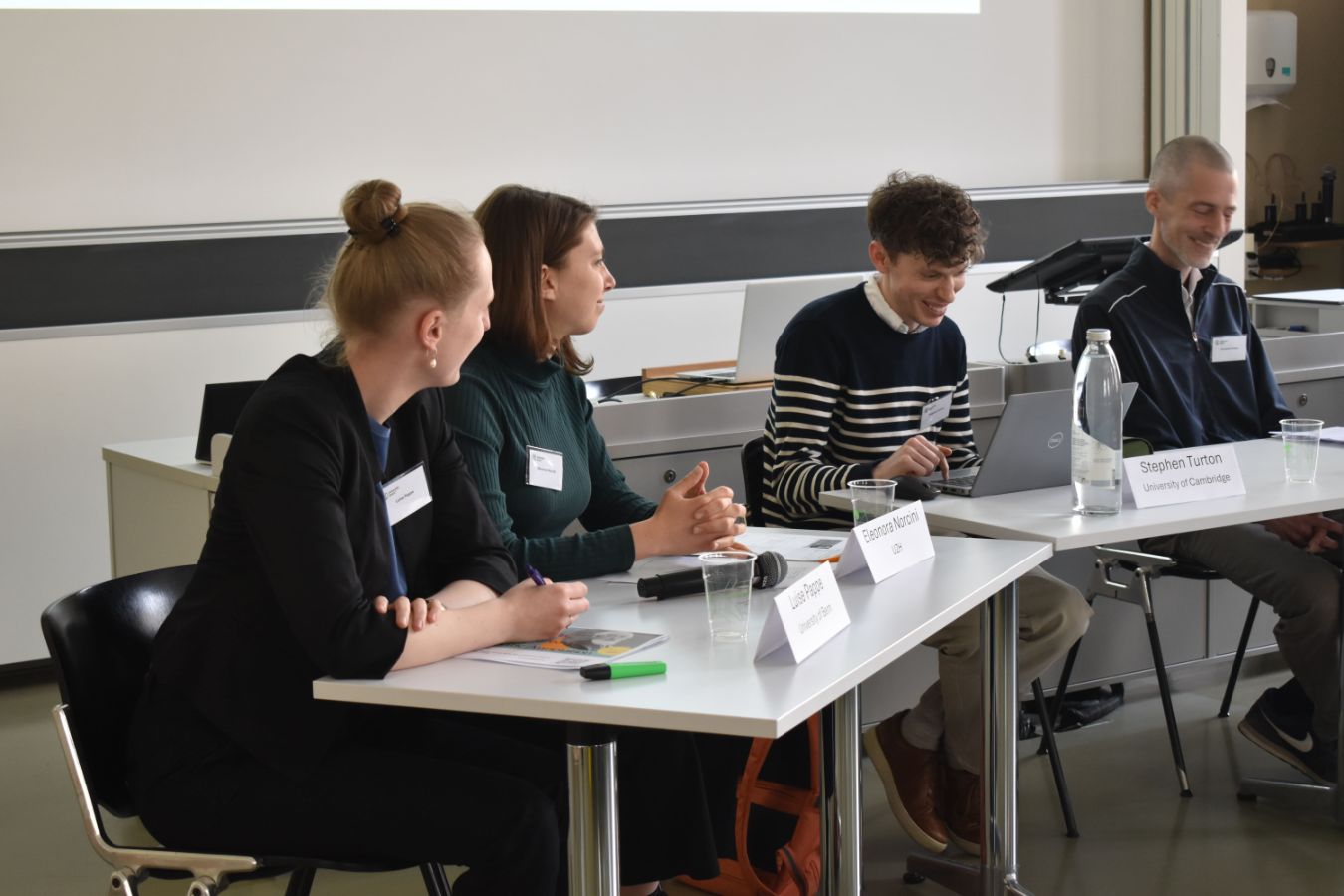
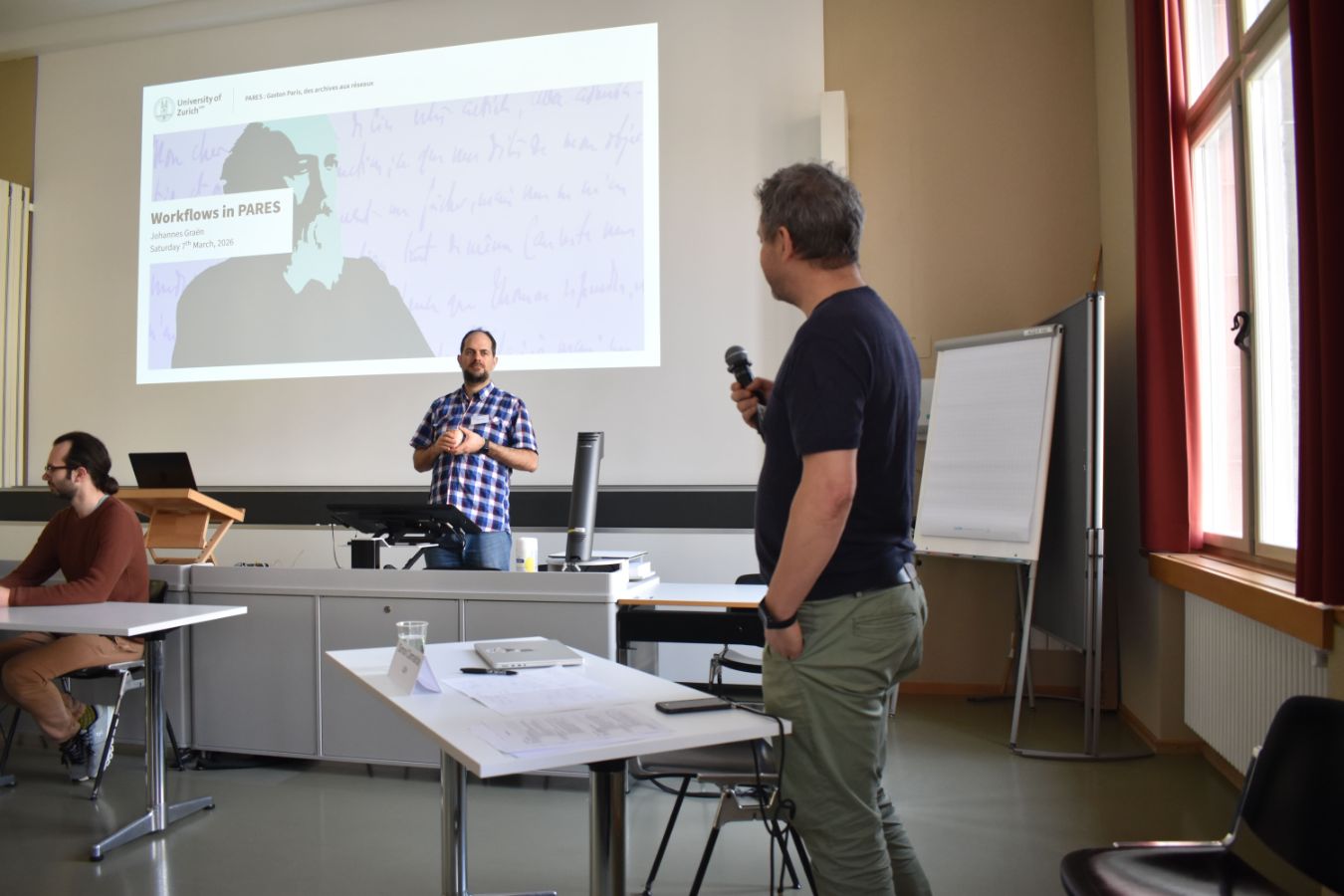
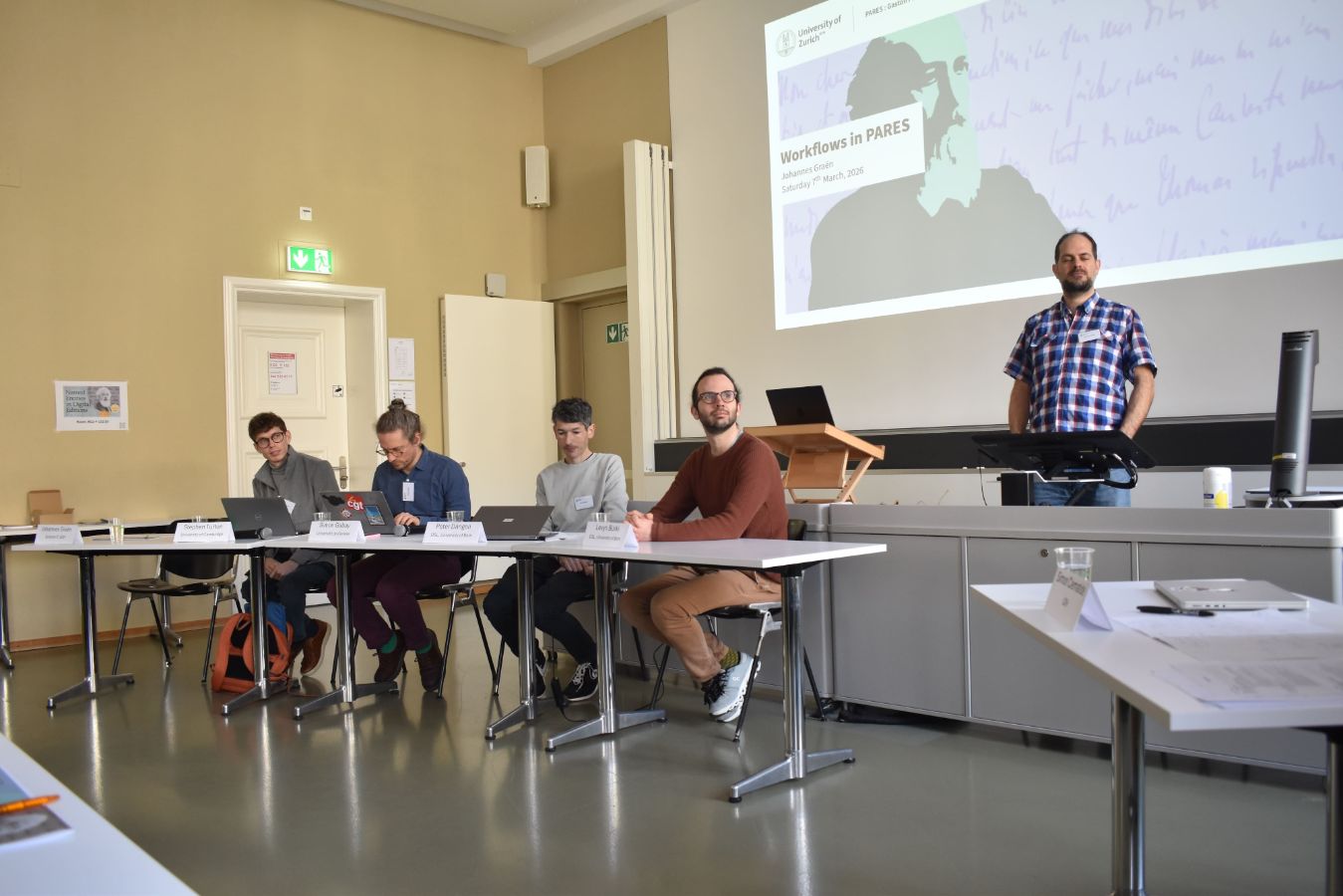
The workshop ended with a roundtable discussion on workflows. Here, too, four short presentations served as the basis for a group discussion with the audience:
Chair: Simon Clematide
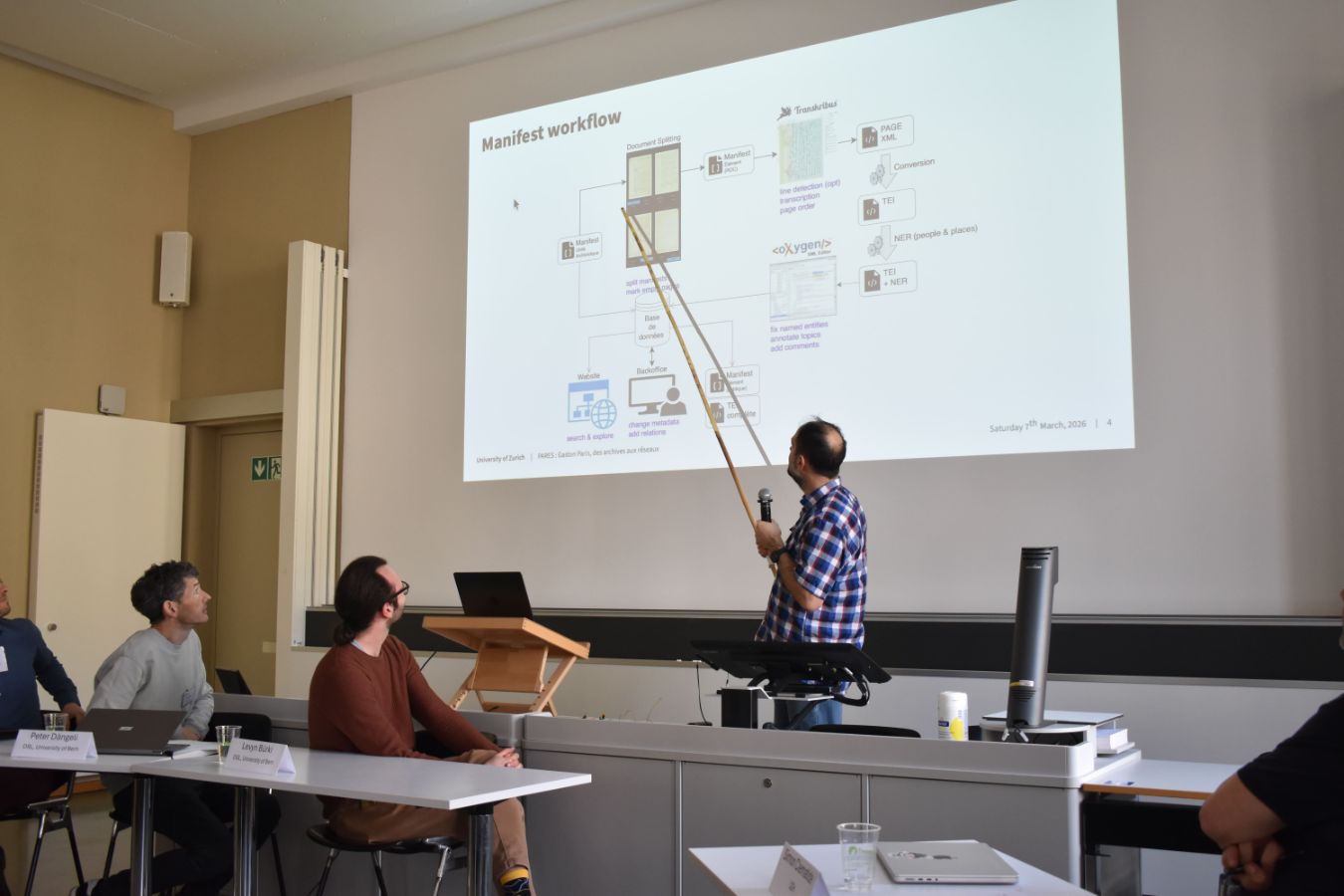
- Johannes Graën (UZH, Science IT): Workflows in PARES
- Stephen Turton (University of Cambridge): Workflow and its tributaries in a UK context
- Simon Gabay (Université de Genève): The FreEM project: from digital facsimiles to named entities
- Peter Dängeli & Levyn Bürki (DSL, University of Bern): Entities and experiments. Corpus exploration, proto indexing and enrichment workflows
The workshop concluded with a group lunch.
If your appetite has been whetted: subscribe to the ZDE newsletter to stay informed about upcoming workshops in the Open Editions series.
Photos: Carola Grande